
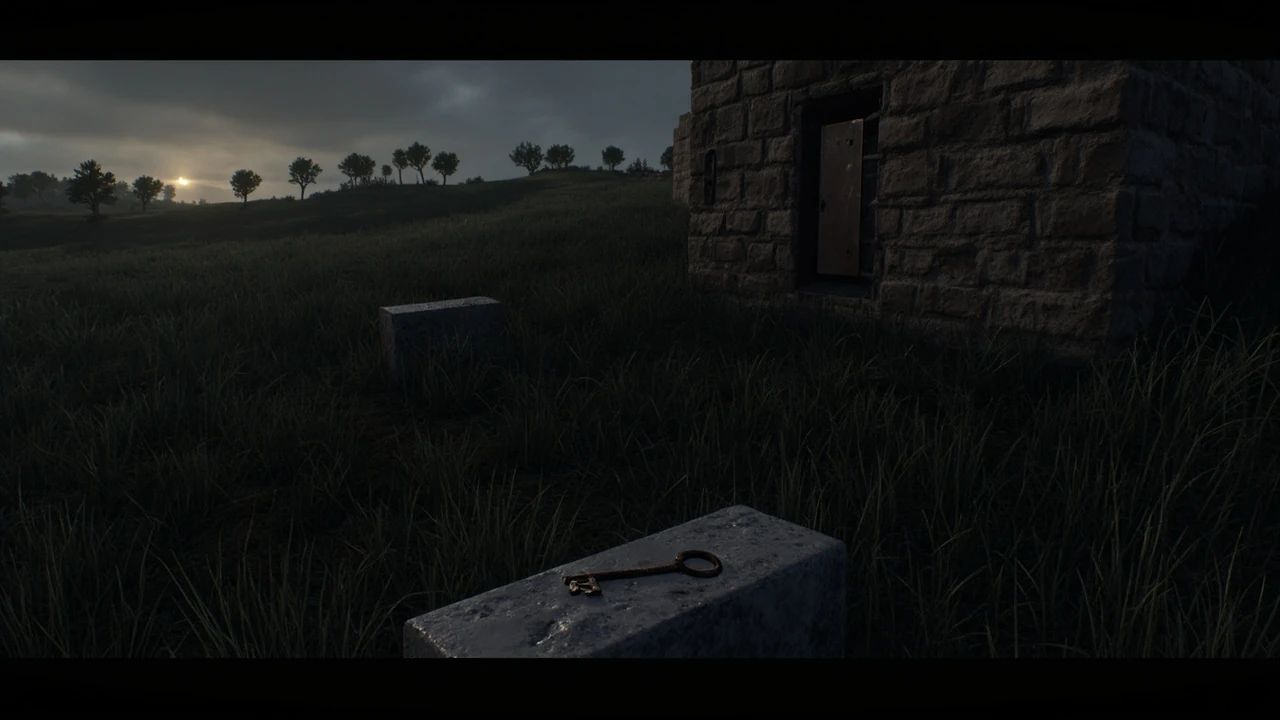
Blue gate cellar key: what it does in ARC Raiders
The blue gate cellar key is one of the more confusing key items in ARC Raiders because, unlike most keys in the game, it does not point you at a single named point of interest. It is a general-purpose opener for a subset of cellar doors scattered around the Blue Gate map, and it is up to the player to figure out which hatches actually respond to it. That design choice turns the key from a simple unlock token into a small exploration objective, and it is the main reason players search for a clear answer to where the blue gate cellar key is actually meant to be used.
This guide focuses on the practical side of that question. It walks through the cellars the key opens, the route to the easiest one, the loot you can reasonably expect inside, and the design reasons the key works the way it does. The goal is not to promise a specific drop table, because ARC Raiders loot is randomized, but to give you enough context to plan a focused run, decide when a Night Raid is worth the extra risk, and avoid wasting the key on a door that does not accept it.
How the blue gate cellar key works
The blue gate cellar key behaves like a small map-specific key rather than a quest item. It does not advance a main storyline, it does not open a unique vault, and it does not appear in a quest log with a waypoint. Instead, it sits in your keyring and silently interacts with a defined set of cellar doors whenever you approach one. If a hatch accepts the key, a short prompt appears and the door opens; if not, you simply get the standard “locked” message and you move on.
That invisible list of accepted doors is the source of most player confusion. A typical key in ARC Raiders ties to a single location with a label such as “Power Plant Basement” or “South Tower Roof.” The blue gate cellar key is different. The in-game description is intentionally vague, and the only reliable way to learn which cellars respond is to either remember them from prior runs or consult a guide. From a game design standpoint, this turns the key into a soft navigational puzzle: the player has to know the map well enough to recognize the right hatches, which encourages repeat visits to the Blue Gate region.
Because the key is not consumed when you fail to open the wrong door, there is little risk in testing cellars you have not tried before. That forgiving failure state is important. It removes the pressure of “use it once, lose it forever,” which would make the key feel punishing in a multiplayer extraction game where death is already costly. Instead, you can treat the blue gate cellar key as a reusable tool that becomes more valuable the better you know the map.
Where to use the blue gate cellar key
The most reliable place to spend the blue gate cellar key is a cellar hatch near the Olive Grove and the Ruined Homestead on the Blue Gate map. The cellars in this area are the easiest to reach, the most commonly documented, and the most forgiving for solo players who do not want to fight across the entire map to use a single key.
To get there, head west from the Ruined Homestead along the road. Just past a small section of stone wall, you will find a locked cellar entrance that accepts the key. The hatch blends into the terrain, so approach it from the road rather than from the field, and listen for the visual cue when the prompt appears. Once opened, the cellar behaves like any other ARC Raiders interior: a short stair down, a loot spawn or two, and an exit route you should plan before you commit.
That hatch is the canonical answer, but it is not the only one. Additional locked cellars attached to houses and buildings around the Blue Gate map also accept the blue gate cellar key. Two commonly cited examples are a cellar south of Raider’s Refuge and another at the Trapper’s Glade on the western side of the map. Treat these as secondary options when the Olive Grove hatch is already looted, contested by another squad, or simply not convenient for your current spawn.
Recommended route for a focused cellar run
If your goal is to use the blue gate cellar key efficiently, treat it as a short side objective inside a larger raid rather than the main reason to drop into the Blue Gate. The cellars themselves do not contain high-tier loot, so overcommitting to a single hatch will usually cost you more time and health than it returns in materials.
| Step | Action | Why it matters |
|---|---|---|
| 1 | Spawn into Blue Gate and identify a nearby safe cluster | Establishes a fallback extraction route before you push inland |
| 2 | Approach the Ruined Homestead from a high ridge or tree line | Lets you spot other squads before you commit to a cellar entrance |
| 3 | Move west along the road until the small stone wall appears | Marks the canonical blue gate cellar key hatch |
| 4 | Unlock the cellar, loot quickly, and retreat toward the nearest extraction | Cellars have a single exit, so leaving fast avoids being trapped |
| 5 | If the hatch is empty, redirect to Raider’s Refuge or Trapper’s Glade | Backup cellars keep the key useful across multiple runs |
| 6 | Save high-tier loot for Night Raids when possible | Higher-tier spawns are more common at night, though risk increases |
The route above is intentionally conservative. In an extraction shooter, time spent in a confined space is time during which another squad can collapse on your position. The blue gate cellar key is most valuable as a small additional yield on an already profitable run, not as the centerpiece of a raid.
What loot to expect inside the cellars
The loot inside blue gate cellars sits firmly in the “useful but unexciting” category. You will generally find crafting materials in moderate quantities and occasional quick-use items such as grenades. Rare gear is possible, but it is not the norm, and you should not plan a raid around the assumption that a cellar will hand you a high-tier weapon or attachment.
For most players, the cellars are worth the detour because the materials are convenient rather than scarce. Crafting components that drop in cellars are the same ones you would otherwise scavenge from buildings, dumpsters, and corpses, but the cellar is a controlled, predictable location. If you know the hatch is there, you can clear it in under a minute and add a small but reliable bump to your haul.
The most commonly reported reward pattern inside ARC Raiders cellars is:
- Common crafting materials such as plastics, metals, and textiles in small stacks.
- One or two quick-use consumables, often grenades or healing items.
- An occasional mid-tier component or mod, usually randomized.
- Rare gear spawns that are infrequent but more common during Night Raids.
Because the loot pool is randomized, treat every cellar as a small bonus rather than a guaranteed payload. If a hatch has already been looted by another squad, it will respawn on the regular server cycle, but the exact timing depends on the live state of your session.
Why Night Raids change the math
Night Raids are a separate mode in ARC Raiders that increase both the risk and the potential reward across the entire map. Cellars are no exception. The same hatch that yields a handful of common materials during a day raid can produce higher-tier components or rare gear during a night run. That is the strongest reason to save your blue gate cellar key for night sessions if you already have a daytime loadout you are happy with.
The trade-off is that Night Raids are darker, often more populated by experienced players, and frequently more aggressive. The cellar hatch near the Ruined Homestead is easier to clear during the day simply because you can see threats coming. At night, you need to bring a loadout that performs in low light and a plan for extraction if another squad pins you inside the cellar stairwell.
A practical compromise is to use the blue gate cellar key during whichever session you are already playing. If you only run Night Raids, save it for night. If you mix sessions, use it whenever the route fits. The key is reusable, so there is no penalty for spending it during a day raid other than missing the slightly higher night-only loot table.
How the key fits into a broader ARC Raiders economy
Keys in ARC Raiders sit between pure consumables and permanent unlocks. They do not expire, they do not require a quest step, and they are not consumed when you use them on the wrong door. That makes them low-stakes inventory items, but it also means the game’s design leans on map knowledge to make them feel rewarding. The blue gate cellar key is a good example of that pattern.
From a systems design perspective, the key does a few things at once:
- It encourages repeat visits to the Blue Gate map rather than a one-time trip.
- It rewards players who learn the map’s hidden geometry, such as cellar hatches tucked behind stone walls.
- It creates soft social discussion because not every player discovers every cellar on their own.
- It provides a small but reliable material income for players who do not want to chase high-tier objectives.
None of that is accidental. Extraction games live or die on player retention, and small repeat objectives are one of the cleanest ways to keep a map feeling active. The blue gate cellar key is a small piece of that loop, and understanding its role makes it easier to decide when to spend it.
Common mistakes when using the blue gate cellar key
Even with a clear route, it is easy to misuse the key. A few patterns show up repeatedly in community discussions, and they are worth avoiding if you want to get consistent value from the item.
Using the key as your raid’s main objective. The cellars are a side trip, not a centerpiece. Players who drop into Blue Gate specifically to use the key tend to ignore richer objectives and end up with a small haul. Treat the key as a bonus on the way to something else.
Failing to plan an exit before entering. A cellar is a confined space with limited sightlines. If you drop in without a planned route back out, you can be trapped by a squad that hears the hatch open. Always know where you are going after the cellar before you commit.
Ignoring the Night Raid modifier. If you only play during the day, you are leaving loot on the table. The blue gate cellar key is one of the easier items to align with a Night Raid because the route is short, so the increased risk is more contained than it would be for a longer objective.
Assuming every cellar accepts the key. Not every hatch on the map responds to the blue gate cellar key. If you find a locked cellar that does not accept it, move on rather than burning time trying to force it open. There are usually other objectives nearby that will pay better than a door that will not open.
How the key compares to other ARC Raiders keys
ARC Raiders uses a wide variety of keys, each tied to a different map, building, or quest chain. The blue gate cellar key is unusual because it is map-scoped but not location-scoped. That makes it worth comparing to a few other key archetypes in the game.
| Key type | Scope | Discovery difficulty | Typical loot tier |
|---|---|---|---|
| Quest-tied key | Single named door | Low, marker provided | Story-relevant or unique |
| Building-tied key | One specific building or vault | Low to medium | Mid to high |
| Blue gate cellar key | Multiple cellars on one map | Medium, no in-game marker | Low to mid, occasionally high at night |
| Event-tied key | Limited-time location | High, time-sensitive | High but seasonal |
Read across the table and the trade-off becomes clear. The blue gate cellar key trades the guaranteed payoff of a single quest door for the flexibility of opening several cellars. That makes it a better fit for players who want a small steady bonus than for players chasing a single big score.
Player tips for getting the most out of the key
A few habits will make the blue gate cellar key more valuable over time without changing how you play the rest of the game.
- Memorize at least two cellar locations so you have a backup if the Olive Grove hatch is taken.
- Pair the cellar with a nearby extraction point so you can leave immediately after looting.
- Bring a short-range loadout, such as a shotgun or SMG, because cellars reward fast close-quarters clearing.
- Avoid using the key during a long, messy fight elsewhere on the map, because the cellar becomes a secondary objective you may not have time for.
- If you are running with a squad, assign one player to watch the exit while another loots the cellar.
None of these tips are mandatory, but they address the most common failure cases: getting trapped, wasting time, and leaving the cellar empty because a squad collapsed on you. The key itself is simple. The discipline around it is what makes it pay off.
What to do if the key feels underwhelming
If you used the blue gate cellar key once and walked away disappointed, the issue is usually expectations, not the item. The key is designed as a small repeatable bonus on the Blue Gate map, not as a ticket to a high-tier loot room. If your goal is high-tier loot, you will get more value from named POIs, elite enemies, or timed events than from any cellar.
That said, there are a few cases where the key genuinely underperforms:
- You are dropping into a highly contested area where the cellar hatch is rarely available.
- Your server population is low, which can affect loot spawns and respawn timing.
- You are running the key during a day raid while ignoring Night Raid modifiers.
If any of those apply, the key is still useful, but you should plan around them. Drop into a quieter part of the map, wait for a less populated session, or save the key for night. The item is reusable, so patience costs nothing.
Where the blue gate cellar key fits in your progression
Progression in ARC Raiders is a mix of gear, materials, map knowledge, and reputation. The blue gate cellar key contributes mostly to the map knowledge and material sides. It will not unlock a new weapon, finish a quest, or push you into a higher tier of matchmaking, but it will give you a small steady stream of crafting components and a reason to revisit a specific part of the Blue Gate map.
For new players, the key is a low-risk way to learn how cellars work in general. Once you understand the geometry of a hatch, the loot flow, and the escape routes, the same lessons apply to other cellars across the game. For experienced players, the key is a small optimization to bolt onto a route you already know well. Either way, it is a useful item to keep in your keyring rather than hoard in a stash.
Designing around keys like the blue gate cellar key
For developers reading this from a game production angle, the blue gate cellar key is a useful case study. It demonstrates a small but intentional design pattern: a reusable key that opens multiple low-tier doors on a single map, with no in-game marker, and a soft bias toward night play. That pattern does several things at once.
It creates repeat traffic on a specific map without forcing a quest. It rewards players who explore the geometry rather than follow a waypoint. It introduces a soft social loop because players discuss where the key works. And it scales with the broader economy because the loot it offers is the same crafting material pool that the rest of the map produces, so it does not destabilize progression.
For a studio designing a similar system, the lessons are:
- Make the key reusable so it never feels punishing.
- Keep the loot modest so it does not compete with major objectives.
- Tie the key to multiple locations so it rewards map knowledge.
- Use night modifiers to add a small layer of risk-versus-reward choice.
That combination produces an item that feels meaningful without dominating the loot economy, and it is a clean example of how a single key can support several design goals at once.
Verifying the cellars the key opens
Because ARC Raiders is a live game, the exact list of cellars that accept the blue gate cellar key can change with patches, map updates, and seasonal events. Before you plan a run around a specific hatch, it is worth confirming that the cellar still responds to the key in the current build. The easiest way to do that is to check the in-game description, scan recent patch notes for changes to key bindings, and verify against a current guide such as the Blue Gate Cellar Key page on the ARC Raiders wiki, which provides useful background for this point.
That last step is important even for experienced players. Extraction games iterate quickly, and a cellar that accepted the key last season may have shifted to a different lock, or vice versa. Treat every guide as a snapshot rather than a permanent answer, and use the most recent patch notes as the final source of truth.
Final notes before you use the key
The blue gate cellar key is a small but reliable tool. Use it on the cellar hatch west of the Ruined Homestead for the easiest run, fall back on the cellars near Raider’s Refuge or Trapper’s Glade when you need a backup, and prefer Night Raids when you want the better loot table. Pair the cellar with a short-range loadout, plan your exit before you enter, and treat the key as a bonus on the way to a larger objective rather than the main reason to drop into the Blue Gate.
For a broader view of how ARC Raiders progression and extraction loops fit together, it is worth reading a wider overview such as the Uggworldtech gaming trends coverage for context on how live-service shooters evolve over time. If you are still building a baseline of map knowledge, the Bind Valorant map guide is a useful reference for how different shooters teach players to read fixed geometry, which is the same skill the blue gate cellar key quietly tests.
Frequently asked questions
Where is the easiest place to use the blue gate cellar key?
The easiest spot is a cellar hatch west of the Ruined Homestead near the Olive Grove. Head west along the road from the homestead until you see a small stone wall, and the locked cellar entrance will be just past it. The route is short, the hatch is easy to find, and the surrounding terrain gives you reasonable cover while you approach and leave.
Does the blue gate cellar key open more than one door?
Yes. The key is designed to open multiple cellars attached to houses and buildings around the Blue Gate map, not just a single named location. The Ruined Homestead hatch is the most commonly cited, but other cellars, including ones south of Raider’s Refuge and at Trapper’s Glade, also accept the key.
Is the blue gate cellar key consumed when used?
No. The key is not consumed when you use it on a matching door, and it is not consumed when you try the wrong door either. You can keep the key in your inventory and use it as many times as you find a compatible cellar. That makes it a low-stakes, reusable tool rather than a one-shot unlock token.
Should I save the key for Night Raids?
It depends on how you play. Night Raids increase the chance of higher-tier loot across the map, including inside cellars, but they also increase the risk because of lower visibility and more aggressive squads. If you already run Night Raids regularly, save the key for those sessions. If you mostly play during the day, use the key whenever the route fits.
What kind of loot is inside blue gate cellars?
Most cellars contain common crafting materials in small stacks, a quick-use item such as a grenade, and occasionally a mid-tier component or mod. Rare gear is possible but not common, and it is more likely during Night Raids. Treat the cellar as a small reliable bonus rather than a guaranteed high-tier payout.
Can I use the key on any locked cellar on the map?
No. Not every locked cellar on the Blue Gate map accepts the blue gate cellar key. Some cellars are tied to other keys, and some are event-locked. If a hatch does not respond to the key, you will get a standard “locked” prompt and the key will stay in your inventory. Move on and try another cellar rather than wasting time on a door that will not open.
Is the blue gate cellar key worth using early in a raid?
It depends on your route. If the Ruined Homestead cellar is close to your spawn and on the way to a larger objective, it is worth a quick stop. If it is far from your main plan, save it for a later run. Cellars are short, but the time cost adds up if you detour across the map just to use a single key.
Does the key work in squads or only solo?
The key works in both solo and squad play. In squads, it is usually safer because another player can watch the exit while you loot the cellar, but the loot is shared in the same way as any other container. If you are running with a full team, coordinate so one player loots while the rest hold the perimeter.
What happens if another squad is already at the cellar?
Treat the cellar as a contested objective. You can either push and try to clear the hatch, or rotate to a backup cellar elsewhere on the map. The key is reusable, so there is no urgency to spend it on a specific hatch if the situation is unfavorable. Often the better play is to extract with your existing loot and come back later.
Where can I confirm the current list of cellars the key opens?
The most reliable place to check the current list is the in-game key description, the most recent ARC Raiders patch notes, and a current external reference such as the Blue Gate Cellar Key wiki page, which provides useful background for this point. Because the game is live, always treat older guides as a snapshot and verify against the latest patch.






Leave a Reply