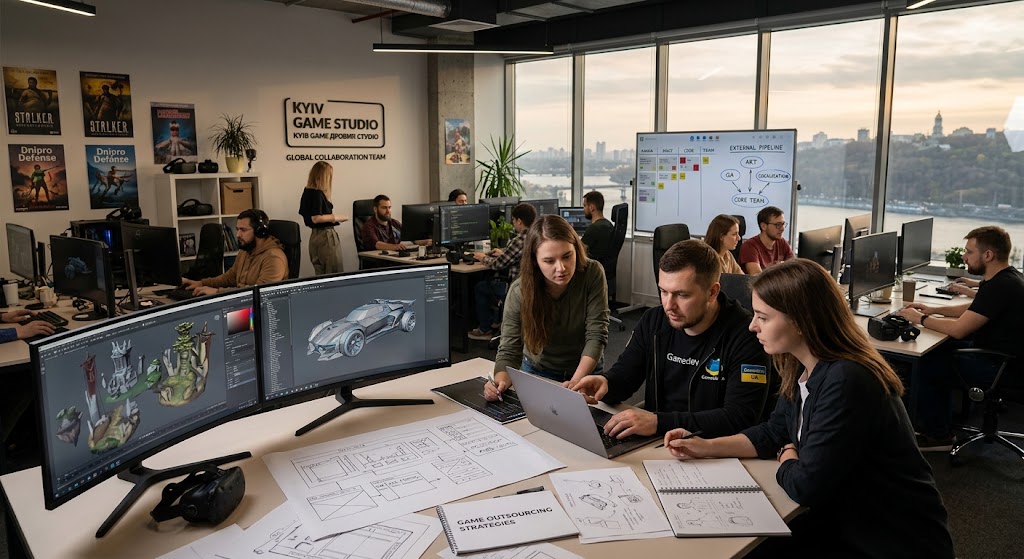
Building a modern video game takes an incredible amount of work. Production demands keep rising every year. Players expect massive worlds, detailed character models, smooth animations, and zero bugs on launch day. Trying to handle every single task in-house often leads to burnt-out teams, missed deadlines, and bloated budgets. That is why so many studios turn to third-party partners to share the workload and keep projects moving forward.
Game Outsourcing Strategies for Modern Studios
External production has become a standard part of game development. It is no longer just a desperate backup plan when a deadline is missed. Instead, smart studio heads plan for external help right from the pre-production phase.
When you delegate specialized tasks, your core internal team gets to focus on what they do best. They can polish core gameplay mechanics, design primary systems, and maintain the creative heart of the project. Meanwhile, external teams build secondary assets, test performance, or code specific features.
This approach gives you tremendous flexibility. You can ramp up your team size during peak production months. Then, you can scale back down when you transition into bug fixing and polish before launch. You avoid hiring full-time staff for short-term needs and save significant operational expenses.
However, running a hybrid setup requires clear systems. It requires honest communication, well-defined technical specifications, and continuous quality checks. Without these safeguards, external assets might fail to match your artistic direction or code quality standards.
Let us look at how studios break down external work, evaluate costs, and manage remote talent efficiently.
| Development Phase | Primary External Tasks | Core Benefits |
|---|---|---|
| Pre-Production | Concept art, lore drafting, visual style exploration | Explores creative options fast without tying up key internal leads. |
| Production | 3D modeling, environment art, animation, audio design | Speeds up content creation and fills skill gaps in the team. |
| Post-Production | Localization, quality assurance, post-launch live ops | Ensures stability across regions while the team plans updates. |
Understanding Key Game Outsourcing Models
Different projects need different external support models. Selecting the right arrangement depends on your budget structure, project timeline, and the level of control you want to retain.
Here are the primary ways studios collaborate with external partners:
- Staff Augmentation: You hire individual contract specialists who integrate directly into your internal team. They attend your daily standups, report to your leads, and work inside your project management tools. This works best when you need specific technical skills for a long period.
- Project-Based Deliverables: You hand over a detailed project specification to an external vendor. They complete the entire batch of assets or code modules for a fixed price and deliver them by a set deadline. This fits discrete tasks like 3D prop creation, voiceover recording, or cinematic trailers.
- Co-Development: An external team takes responsibility for entire game systems, ports, or game modes. They operate with significant autonomy, managing their own internal sub-teams while working alongside your leads. This is ideal when expanding a game to new platforms like console or mobile.
- Dedicated External Team: An external agency sets up a long-term unit reserved exclusively for your studio. They adapt entirely to your workflows, tech stack, and studio culture. This model provides stability across multi-year AAA productions.
Choosing between these formats depends heavily on your team’s bandwidth. If your producers are already overloaded, staff augmentation might add too much management friction. In that case, a project-based or co-development setup works much better.
Think about your internal review pipeline. How fast can your art director review fifty 3D models? If feedback takes two weeks, remote teams will stall out. Make sure your team can support external workflows before signing contracts.
How Game Outsourcing Reduces Development Costs
Cost management is usually the biggest driver behind external production decisions. Hiring full-time employees involves long-term commitments. You pay base salaries, healthcare, insurance, hardware costs, software licenses, and paid time off. When a project wraps up, keeping a huge team on payroll without active work quickly drains cash reserves.
Working with external talent lets you convert fixed overhead into variable costs. You pay for the exact volume of work you need when you need it. Once the work is done, your financial obligations end.
Regional economic differences also play a massive role. Hiring senior developers in major tech hubs comes with steep price tags. Partnering with skilled studios in Eastern Europe, Southeast Asia, or Latin America offers high-quality output at far lower hourly rates.
Look at how typical production expenses compare between internal hires and external vendors:
| Expense Category | In-House Production | External Partner |
|---|---|---|
| Recruitment & Onboarding | High upfront cost and long hiring cycles | Minimal; vendor manages team assembly |
| Hardware & Workstations | Full studio expense per developer | Handled entirely by the external vendor |
| Software Licensing | Direct per-seat recurring fees | Included in vendor service pricing |
| Scalability Flexibility | Low; layoffs carry severance and morale costs | High; contracts scale up or down as needed |
| Specialized Expertise | Requires training or slow recruitment | Instant access to specialized talent |
And those cost savings can be redirected back into core game features. You can put more budget into marketing, community management, or server infrastructure. That balance makes your entire studio far more resilient.
So, how do you make sure you get maximum value for your investment? Start with precise scope documentation. Vague briefs lead to rework, missed milestones, and budget overruns.
Essential Steps for Selecting External Partners
Finding the right vendor is just as important as hiring internal staff. A bad fit leads to missed dates, broken assets, and wasted money. You need a reliable, methodical vetting process.
Follow these steps to find and vet external production partners:
- Review Specialized Portfolios: Do not just look at pretty images. Ask for real-time game assets, wireframes, breakdown videos, and shipped titles. Verify if their published work matches your engine, target art style, and technical requirements.
- Run Paid Test Milestones: Never skip a paid trial. Assign a small, representative task with a tight deadline. This tests not only their artistic or technical output but also their communication speed, responsiveness to feedback, and ability to meet deadlines under realistic conditions.
- Evaluate Security Protocols: Protecting your intellectual property is vital. Inspect their data security standards, source code access controls, and non-disclosure agreement procedures before sending proprietary tools or design documents.
- Verify Technical Infrastructure: Make sure the vendor uses compatible version control systems, build pipelines, and communications software. Seamless technical alignment prevents migration friction down the line.
- Check References and Track Records: Speak directly with past clients. Ask how the vendor handles unexpected delays, scope changes, and crunch periods. Real client feedback reveals potential red flags early.
Once you select a partner, setup clear communication channels. Establish daily or weekly check-ins via Slack, Discord, or Teams. Use transparent task tracking tools like Jira, Trello, or ShotGrid so everyone sees real-time progress.
Provide detailed style guides and technical specifications right at launch. Include polygon count limits, texture map sizes, folder conventions, and naming rules. The more explicit your documentation is, the fewer revisions you will have to request later.
Treat your external partner like an extension of your own studio. Share project goals, milestones, and context. When external developers understand how their work fits into the final game, their output quality improves naturally.
Finally, set up an efficient feedback loop. Appoint a dedicated internal contact person for each discipline. If an external artist works with three different leads giving conflicting feedback, confusion takes over. One clear voice prevents mixed messages and keeps production moving forward.
Remember that relationships build better results over time. When you find a reliable partner, nurture that relationship across multiple titles. Long-term partners learn your pipeline, anticipate your needs, and deliver higher quality with every release.
Frequently Asked Questions
What Is Game Outsourcing?
It is the practice of contracting external studios, agencies, or freelancers to handle specific game development tasks. These tasks can include 3D art creation, 2D concept art, animation, programming, quality assurance, sound design, localization, and community management.
Why Do Studios Choose External Production Teams?
Studios use external production to scale capacity quickly, access specialized talent, and control development costs. It allows core internal teams to focus on essential game mechanics while external specialists produce assets, conduct testing, or build supporting features.
How Do Vendors Protect Intellectual Property?
Reputable partners enforce strict legal protections, including comprehensive non-disclosure agreements, restricted repository access, secure internal networks, and strict data handling rules. All intellectual property rights are assigned directly to the client upon payment.
Which Tasks Are Best Suited for Third-Party Vendors?
Modular, high-volume tasks work best for external teams. Common examples include environment art, 3D character props, vehicle models, animation sets, quality assurance testing, platform porting, audio design, and language localization.
How Are External Services Typically Priced?
Pricing varies based on project scope and collaboration model. Common pricing structures include fixed-cost contracts for well-defined asset batches, time-and-materials hourly billing for ongoing tasks, or monthly retainer rates for dedicated full-time development units.
How Do Developers Ensure Quality Control?
Quality is maintained through comprehensive style guides, clear technical specifications, mandatory paid test tasks, milestone reviews, and open communication channels. Assigning dedicated internal leads to review deliverables ensures everything meets project standards.
Can Small Independent Developers Benefit from External Teams?
Yes, indie developers use external partners to fill crucial skill gaps without hiring permanent staff. It allows small teams to create high-quality art, sound, and code, giving their projects high production values on a limited budget.
Delegating development tasks is one of the most effective strategies for modern game creators. It gives you access to incredible talent around the world, keeps your payroll flexible, and ensures your game hits the market on schedule. By setting clear expectations, building honest relationships, and keeping your technical guidelines sharp, you can build ambitious games without burning out your core team.

Leave a Reply