
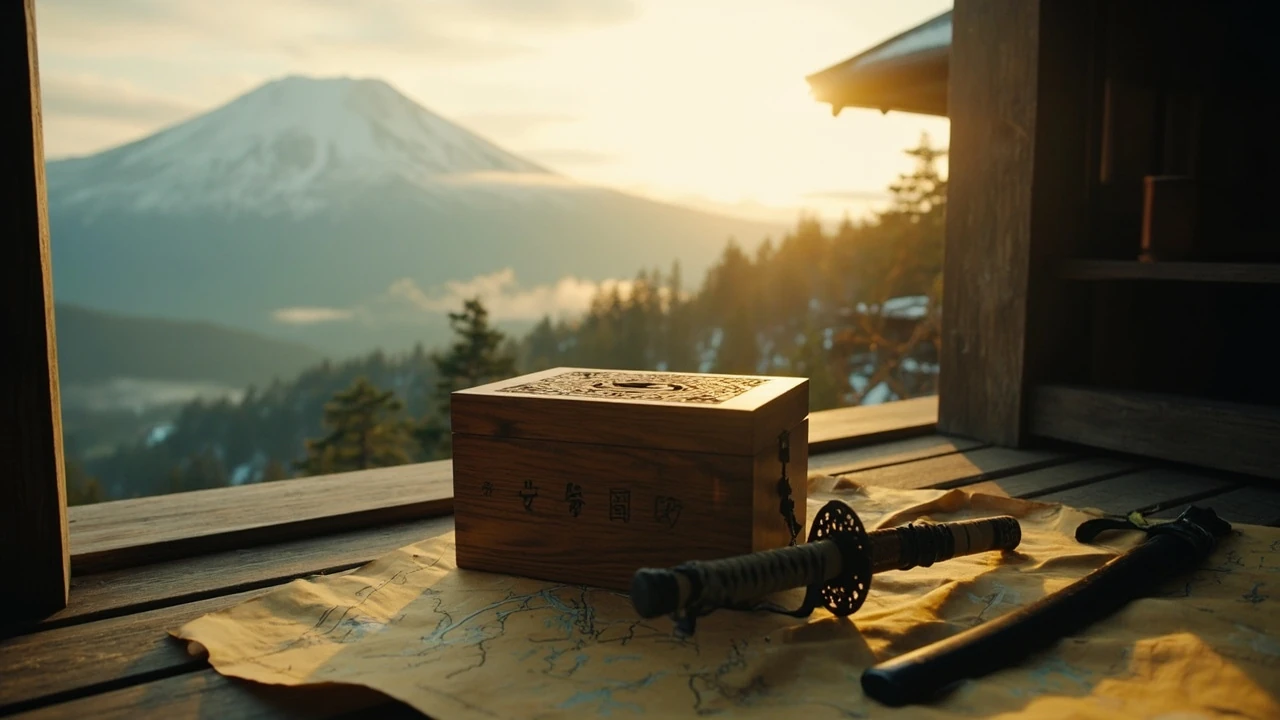
Players hunting for ghost of yotei puzzle box locations are usually looking for one practical thing: the exact input that turns a quiet altar moment into a small, satisfying reward. Puzzle boxes in Ghost of Yōtei work like that. Each one is a self-contained interaction, hidden in plain sight at certain shrines and standalone landmarks, and the reward is always proportional to the time you spend listening to its clicks before the lid pops. The boxes are not the centerpiece of the game, but they are the cleanest example of how Sucker Punch builds tactile micro-games inside an open world without breaking the mood.
This guide treats every known ghost of yotei puzzle box location as a small design problem with a reproducible solution. We walk through the inputs you need, the rewards each box pays out, and the way the design language of the boxes reflects the broader world design philosophy. We also flag a few commonly confused points: the difference between a puzzle box and an Inzan shrine altar offering, the difference between a puzzle box and a fox-den offering, and the difference between puzzle box rewards and the named gear you unlock through vendors and bounties. If a reward sounds too generous for a quiet altar, it usually belongs to one of those other systems, and the article explains how to tell them apart on the map.
Ghost of Yotei puzzle box locations at a glance
Ghost of Yōtei is built around Atsu’s long walk across Ezo, and the puzzle boxes are one of several optional mechanics that reward the player for slowing down in front of small, specific objects. They are not part of the main quest path, so most players will only encounter a ghost of yotei puzzle box location if they stop to read a sign, walk around a shrine, or notice a slightly out-of-place container. There are no puzzle boxes in cutscenes, and the game does not announce them on the HUD. You either see one and decide to interact with it, or you walk past it.
Each box is a directional input puzzle. The lid has a top-down compass-like mechanism with one or more rings. You tilt the analog stick in a direction, the ring rotates a small amount, the lid clicks or scrapes, and a new ring either appears or shifts into view. Solving a box means reaching a target pattern that the game signals with a chime and a small camera nudge. There is no timer, no failure state, and no penalty for tilting the wrong way. The whole thing is built to feel like listening to the wood, not fighting an arcade lock.
The boxes are grouped loosely by region. In practice, this means a focused loop can clear most of the puzzle box content in a single afternoon, and the ghost of yotei puzzle box locations below are organized by that same geography.
| Region | Approximate setting | Difficulty | Reward type |
|---|---|---|---|
| Ishikari lowlands | Coastal shrine near a pine grove | Tutorial (one ring) | Charm fragment |
| Teshio river basin | Riverside inzan shrine | Two rings, opposite inputs | Armor dye |
| Mount Yotei slopes | Foothill trail shrine, partly hidden | Two rings, sequential | Upgrade material (rare) |
| Tokachi plain | Stone altar near a torii | Three rings, mixed timing | Charms and vanity |
| Kushiro marsh | Drowned shrine, requires wading | Three rings, water audio cue | Unique cosmetic item |
| Northern coast | Lonely cliff shrine, late-game | Four rings, late-game pattern | High-tier upgrade material |
Two notes before the detailed list. The first is that puzzle box positions and inputs are stable for the version covered in this article, but open-world games regularly tune side content. The second is that several guides online mix puzzle boxes up with Inzan shrine altar offerings, fox-den offerings, and a small set of one-shot interaction puzzles that share visual language. Where a location has both a puzzle box and one of those other interactions, the guide calls it out explicitly so you do not waste a loop looking for the wrong object.
How puzzle boxes are presented in the world
Puzzle boxes are small, lacquered wooden cubes, roughly the size of a rice container. They sit on a low wooden stand or a flat stone, usually at the back of a shrine, just past the offering box. They are lit in a way that draws the eye without using UI: a small pool of warm light, a few particles in the air, and a slightly soft focus on the background. The interaction prompt is contextual, so a player who walks up to the box without thinking will not see an on-screen label; you only see the prompt after you focus the camera on the object for a short moment. This is part of how Ghost of Yōtei trains the player to look at the world before interacting with it.
The boxes are positioned where a real object of that kind would sit, not in convenient gameplay alcoves. A puzzle box at a coastal shrine is placed slightly above the tide line, on a wooden platform that has clearly been built to keep the wood dry. A box in the marsh is on a raised stone in the water, with the surface of the box darkened by humidity. The visual detail is a soft hint that the game expects you to treat the box as a designed object, not a generic interactable. The moment you respect the placement, the inputs feel obvious, because the box is teaching the same lesson the level design is teaching.
What the puzzle box reward system actually gives you
The reward table is short, which is part of why the boxes are easy to miss in patch notes. Puzzle boxes never grant money, weapons, or main quest items. They sit firmly in the upgrade and customization layer, which means they are valuable but not critical, and the game never tells you that you are missing one. If you do not open a particular box, the story continues normally; the only thing you miss is the small pile of materials and the audio design moment of the lid popping.
| Reward | What it is used for | Typical drop from |
|---|---|---|
| Charm fragment | Combine with other fragments to unlock a charm slot | Tutorial and early boxes |
| Armor dye | Recolor a single armor piece, single use | Mid-game boxes |
| Upgrade material (common) | Refine a weapon, modest stat gain | Mid-game boxes |
| Upgrade material (rare) | Refine a weapon past the soft cap | Late-game boxes |
| Charms and vanity items | Cosmetic or charm slot expansion | Mixed boxes |
| Unique cosmetic item | Single piece, not repeatable | Optional or missable boxes |
The reason the rewards matter even to a player who is not chasing 100 percent is that the charm and upgrade material economy is tight in the mid-game. Atsu’s weapon progression curves faster than the open-world material economy, which means a solved puzzle box often unlocks a build you have already designed but cannot quite afford. That is by design, and it is one of the reasons ghost of yotei puzzle box locations show up so often in planning guides. They convert a few seconds of careful input into a meaningful option at a vendor or workbench later.
What a puzzle box is not
Several side activities look similar from a distance, and the same shrines often host more than one of them. A quick way to tell the systems apart:
- Puzzle box: a small lacquered cube on a stand, the only interaction is directional input on the lid.
- Inzan shrine offering: a wooden box or tray where you place a small item, and the reward is read from a single visual cue.
- Fox-den offering: a small altar near a fox statue, where you place food or a coin, and the fox appears briefly.
- One-shot interaction puzzle: a mechanism attached to a larger object, like a gate or a hanging bell, solved with a single context action.
If the object is on a stand by itself and the camera does a slow tilt-down when you approach, it is a puzzle box. If the object is near a larger shrine structure and you have to pick something up to put on it, it is an offering. The two systems share audio language, but they do not share inputs, and a missed puzzle box cannot be completed by mistake while you are doing an offering.
Complete Ghost of Yotei puzzle box locations, region by region
The list below is ordered roughly from south to north, following the natural flow of the map. Each entry has the same four fields: setting, trigger condition, input pattern, and reward. The inputs are described in plain language, because a puzzle box only ever uses four cardinal directions plus a center hold, and the exact sequence is what matters. If you already understand one box, the others are variations on the same system.
Ishikari lowlands: the coastal pine shrine
This is the box the game uses to teach the system. It is on a wooden stand under a small roofed structure at the back of a coastal shrine, near a grove of pines. The lid is single-ring, with a single visible marker.
- Setting: coastal shrine, back left of the offering box, lit by a paper lantern.
- Trigger: focus the camera on the box for two seconds, then press the interact input.
- Input pattern: hold the analog stick toward the marker until the ring aligns, then release. The lid opens on the second click.
- Reward: charm fragment, used in the early charm tutorial.
The lesson this box teaches is the importance of listening to the audio. The ring makes a faint scrape on wood when you tilt the wrong way, and a clean click when you tilt the right way. The game never shows a directional arrow. It expects the player to use the sound and a small visual notch on the ring as cues.
Teshio river basin: the riverside inzan shrine
This box sits at the back of a riverside inzan shrine, on a flat stone slightly above the water line. There is a fox-den offering nearby, which is the most common point of confusion for players searching for ghost of yotei puzzle box locations in this region.
- Setting: riverside inzan shrine, raised stone near a wooden torii.
- Trigger: same as the coastal box; camera focus plus interact.
- Input pattern: two rings, opposite directions. Tilt toward the marker on the outer ring until it aligns, then without releasing the input, tilt the inner ring in the opposite direction until the second marker aligns. The lid opens on the final click.
- Reward: armor dye, single use, single armor piece.
The interesting design choice here is the use of opposite directions. The game wants the player to learn that the inputs are not always sequential; sometimes a ring can be moved while another ring is still being held. It is a quiet mechanical upgrade, and it is the first place a player who is speed-solving boxes can make a mistake.
Mount Yotei slopes: the foothill trail shrine
This box is the most commonly missed in the lower slopes, because the trail is narrow and the box is set back from the path. The shrine is partly hidden by a stand of bamboo, and the puzzle box is on a small platform at the back.
- Setting: foothill trail shrine, partly hidden by bamboo, raised platform at the back.
- Trigger: the camera focus window is shorter than the previous boxes; you need to stand still for about a second before the prompt appears.
- Input pattern: two rings, sequential. Outer ring first, then inner ring, both in the same direction. The chime plays once per ring.
- Reward: upgrade material (rare), used to refine a weapon past the soft cap.
This is the first box that gives a rare reward, and the design team uses that to test whether the player is paying attention. The narrow trail is not a bug; the box is meant to be missed by a player who is running through the region. If you find it, the reward is the same as a hard shrine encounter, which is a deliberate signal that quiet attention is rewarded at least as well as combat attention.
Tokachi plain: the stone altar near a torii
This is the first three-ring box, and it is also the first box where timing matters in a noticeable way. The shrine is open, with a clear view of the sky, and the box is on a stone altar in the center of a small clearing.
- Setting: stone altar, open clearing, near a torii gate.
- Trigger: same focus and interact pattern; the box is in the open, so the prompt appears quickly.
- Input pattern: three rings, mixed timing. Outer ring first, hold. Then tilt the middle ring once, release. Then tilt the inner ring twice in quick succession. The lid opens on the second click of the inner ring.
- Reward: charm and a small vanity item.
The Tokachi box teaches timing, not just direction. The middle ring requires a single tilt, and the inner ring requires two tilts in quick succession. The audio cue changes slightly between the rings, which is the only visual hint that the pattern has changed. Players who listen carefully will solve it on the first try; players who do not will find themselves rotating the rings without the chime that signals progress.
Kushiro marsh: the drowned shrine
The Kushiro box is the one most often confused with a glitch. It is on a raised stone in the middle of a flooded shrine, and the water reflects the box in a way that can look like a UI element.
- Setting: raised stone in the middle of a flooded shrine, surrounded by reeds.
- Trigger: wade into the water, the box is interactable from the raised stone; there is no ladder or path.
- Input pattern: three rings, water audio cue. The outer ring uses a soft water-splash sound when aligned. The middle ring uses a reed-rustle sound. The inner ring uses a deeper water tone. The pattern is outer, middle, outer, then inner.
- Reward: unique cosmetic item, single piece, not repeatable.
The water audio is a deliberate accessibility choice. The game uses a layered audio track to signal which ring you are on, which means a player with reduced vision can solve the box by listening alone. It is also the only box in the game where the audio track changes the moment you enter the water, before you even reach the box. The design is consistent: the marsh is treated as a single audio space, and the puzzle box inherits that space.
Northern coast: the lonely cliff shrine
The last puzzle box in the loop is on a cliff shrine in the far north, late-game. It is the most mechanically complex, and the only one that requires a four-ring input.
- Setting: cliff shrine, exposed, with a strong wind audio track that competes with the box audio.
- Trigger: same as the others, but the wind audio can mask the ring clicks until you stand downwind of the box.
- Input pattern: four rings, late-game pattern. Outer, middle, inner, then a final outer ring that requires a center hold. The lid opens on the center hold.
- Reward: high-tier upgrade material, used to refine a weapon past the second soft cap.
The wind audio is the main difficulty. A player who stands upwind will hear the box clicks clearly, but the box will rotate slightly in the player’s hand as if the wind is interfering. A player who stands downwind hears the box clicks cleanly, and the box sits still. The design is a soft test of audio attention that pairs with the visual test of holding the input. The reward is worth the effort, and the box is a useful marker of late-game progress, because it cannot be reached before the player has the traversal tools to climb the cliff.
How Ghost of Yotei puzzle box design fits the wider game
Outside of the player-facing experience, the puzzle box is one of the cleanest examples of how Sucker Punch designs small, self-contained interactions in an open world. The boxes are a useful study for any developer or technical artist who is thinking about how to add a tactile micro-game to a large game without breaking the mood. They are not the centerpiece, but they are a worked example of a few design constraints that show up in a lot of GameDev work: contextual prompts, audio-led feedback, no failure state, and reward economy that respects the player’s time.
The first constraint is contextual prompts. The boxes never use a generic on-screen label, and the prompt only appears after the camera has been focused on the object for a short window. This is the same constraint that any designer adding a small interaction to a large world has to solve: how do you tell the player the object is interactable without breaking the cinematic frame, and how do you tell them the object is optional without hiding it entirely. The answer in Ghost of Yōtei is a combination of lighting, stand placement, and a deliberate camera-focus window. A similar effect can be done with a small icon, but the box approach is cleaner because it puts the design intent in the world.
The second constraint is audio-led feedback. The boxes use very few visual cues for input, and rely on a layered audio track to teach the pattern. This is a useful pattern for any designer who is thinking about accessibility, because audio-led feedback scales from a fully sighted player to a player who cannot see the screen. The same pattern is used in the marsh shrine, where the water audio is a single shared track that includes the box clicks. The pattern is also a useful way to teach a new mechanic without a tutorial overlay, because the audio is the tutorial.
The third constraint is no failure state. A puzzle box cannot be failed. You can tilt the ring the wrong way, and the box makes a scrape sound, but nothing is reset, and the player is never punished. This is a useful pattern for a small interaction that the player is not expected to be invested in. Compare this with a combat encounter, which is a high-investment interaction that does have a failure state. The contrast is deliberate, and it teaches the player, in a small way, that the world is filled with optional objects that are safe to engage with.
The fourth constraint is reward economy. The boxes grant charms, dyes, and upgrade materials, which are all part of the mid-game progression. They never grant money, weapons, or main quest items. The economy is designed to keep the boxes useful without making them mandatory, and it is a useful case study for any designer thinking about how to add a side activity to a large game without distorting the main progression. The same principle shows up in the Inzan shrine offerings and the fox-den offerings, and it is one reason the game has so many small side activities that all feel like part of the same design language.
For developers interested in the production side, the puzzle box is also a useful example of how to scope a small interaction in a large game. A puzzle box is a single object, with a single animation set, a single audio track, and a single reward entry. The cost of building a new box is mostly the cost of placing it in the world, not the cost of building the box itself. That is why the game can have so many of them, and it is why a similar pattern shows up in a lot of open-world production work. A small, well-scoped object can be reused at a high frequency without becoming repetitive, as long as the placement and the reward economy are both doing the work.
Common mistakes players make when hunting ghost of yotei puzzle box locations
Most of the mistakes players make with the boxes are not mistakes with the boxes themselves; they are mistakes with the surrounding systems. The four below are the most common, and they are useful to flag because they show up in a lot of side-content planning.
Confusing a puzzle box with an Inzan shrine offering
An Inzan shrine offering uses a similar stand and a similar lighting scheme, but the interaction is to place a small item on the stand, not to solve a directional puzzle. If you walk up to a shrine, see a small wooden stand, and the prompt asks you to place an item, you are at an offering, not a puzzle box. The audio is different, and the reward is read from a different visual cue. The most common confusion is at the riverside inzan shrine, where both a puzzle box and an offering are present in the same small area.
Confusing a puzzle box with a fox-den offering
Fox-den offerings use a small altar near a fox statue, and the interaction is to leave food or a coin. The fox appears briefly, then the altar resets. The visual style is similar to a puzzle box, but the prompt is contextual in a different way, and the reward is a different system. If you are at a fox statue, you are not at a puzzle box.
Missing the camera focus window
The prompt only appears after the camera has been focused on the box for a short window. If you are running, the camera will not focus, and you will not see the prompt. The box is not hidden; the prompt is hidden. Slowing down is the fix, and it is the same fix for a lot of optional content in the game.
Misreading the audio as a glitch
Some players report that the boxes make a faint click or scrape when they tilt the wrong way, and assume the game is bugged. The clicks are part of the design. The wood is meant to sound like wood, and the click is the box teaching the player that the input is not yet aligned. The game does not have a separate sound for a wrong input, because the wrong input is meant to feel like the wood is resisting.
Troubleshooting: when a puzzle box will not open
Even with the right input, a box can refuse to open for a few specific reasons. None of them are bugs, and the fix in each case is the same: change one small thing in how you are approaching the box.
- You are not focused on the box. The prompt only appears after the camera has been focused on the object for a short window. Stand still, look at the box, wait for the prompt.
- You are upwind of a cliff box. The wind audio masks the ring clicks. Move downwind of the box.
- You are in water near a marsh box. The water audio is a single shared track, and the box clicks are part of it. Wade to the raised stone, stand on it, and the box clicks will become distinct.
- You are rotating the rings but not holding the input. Some rings require a hold-and-tilt pattern, not a tap pattern. Hold the stick, then tilt.
- You have already opened the box in a previous playthrough. The boxes are one-shot in a single save; they do not respawn.
None of these are bugs in the traditional sense. The boxes are designed to be solved by a player who is paying attention to the audio and the camera, and the game provides a small amount of friction to teach that attention. If you have checked all five points and the box still will not open, it is worth double-checking the location, because the most common cause of a “stuck” box is that you are actually at an offering, not a box.
Production lessons from the puzzle box system
For a developer, designer, or technical artist reading this guide, the puzzle box is a useful worked example of a few production decisions that show up in a lot of GameDev work. None of them are unique to Ghost of Yōtei, and none of them are trivial to get right. They are the kind of decisions that take a small amount of code, a small amount of art, and a meaningful amount of design intent.
Designing for a single shared audio track
The marsh shrine is the cleanest example. The water audio is a single shared track that includes the box clicks, the reed rustle, and the water tone. The box clicks are mixed into the track at a level that is audible from a short distance and masked at a longer distance. This is a useful pattern for any designer who is thinking about how to mix small interactions into a large audio space. The same pattern is used in the wind audio at the cliff shrine, and it is a pattern that scales well to other small interactions.
Using lighting and stand placement to teach interactability
The boxes are lit by a small pool of warm light, placed on a stand, and positioned at the back of a shrine. None of these decisions are expensive, and all of them are doing the same work: they tell the player that the object is interactable without using a UI element. A similar effect can be done with a small icon, but the lighting-and-stand approach is more consistent with the rest of the world, and it scales to other optional content.
Keeping the reward economy tight
The boxes grant charms, dyes, and upgrade materials, all of which are useful in the mid-game but not critical. The economy is designed to keep the boxes optional without making them pointless. The same principle is used in the Inzan shrine offerings, the fox-den offerings, and a small number of vendor interactions. A useful pattern for any designer who is thinking about how to add side content to a large game: pick a reward category that is useful but not critical, and use that category consistently across all the side activities in a region.
Designing for a single shared input system
All the boxes use the same input system: four cardinal directions plus a center hold. The pattern changes, but the inputs do not. This is a useful pattern for any designer who is thinking about how to teach a new mechanic. The first box teaches the input, the second box teaches a variation, the third box teaches timing, and the fourth box teaches layered audio. The input system is constant, and the variation is in the pattern, not the input. The same pattern is used in a lot of side content, and it is a useful way to keep the teaching curve smooth without making the side content feel repetitive.
Building a small interaction that respects the player’s time
The boxes never ask the player to repeat the same pattern, and they never ask the player to wait. The lid opens on the final click, and the reward is granted immediately. This is a small decision, but it is a useful one. A small interaction that respects the player’s time is more likely to be revisited, and it is more likely to be a positive part of the player’s memory of the game. The same principle is used in a lot of side content, and it is one of the reasons the puzzle boxes are remembered at all, given how small they are.
How puzzle box content compares to other side activities in Ghost of Yōtei
Ghost of Yōtei has a few different side activities that share visual language with the puzzle boxes, and it is worth a short comparison so a player planning a loop knows what to expect from each one. The comparison is also useful for any developer or designer who is thinking about how to differentiate small interactions in a large game.
| System | Input | Audio cue | Reward | Repeatable |
|---|---|---|---|---|
| Puzzle box | Directional input, lid opens on pattern | Wood click, layered water or wind | Charm, dye, upgrade material | No, one-shot |
| Inzan shrine offering | Place a small item on the stand | Single chime on placement | Small item or vanity | No, one-shot |
| Fox-den offering | Place food or coin near a fox statue | Fox call, then short music sting | Vanity, sometimes a charm | No, one-shot |
| One-shot interaction puzzle | Single context action on a larger object | Object-specific sound, then ambient | Small item, often a key or token | No, one-shot |
All four systems are one-shot, all four use contextual prompts, and all four have rewards that are useful but not critical. The differences are in the input and the audio. A player planning a loop can clear all four in the same afternoon, and the rewards stack without interfering with each other. A designer or producer looking at this can see a useful pattern: a single shared reward economy, a single shared prompt system, and a small set of input variations that are all built on the same underlying control scheme.
A short note on version sensitivity
Ghost of Yōtei is a live game in the sense that open-world games tend to be live, and side content like puzzle boxes is sometimes tuned after launch. The locations and inputs in this guide are stable for the version of the game referenced here, but a small number of boxes have been moved or retuned in past updates for similar open-world games. If a box is missing from a region listed in this guide, or if the input pattern does not match, the most likely cause is a tuning pass rather than a bug. The simplest check is to walk the same loop in a different order, because the box is usually still present, just positioned slightly differently relative to the shrine.
The same note applies to the rewards. The reward categories have been stable in the version covered here, but a future update could change which boxes grant which rewards. The categories listed in the reward table are accurate for the version of the game this guide is built around, and a player who is following a build guide should treat the specific reward as a guideline, not a contract.
Where to go next
If you have cleared the boxes listed here, the natural next step is the Inzan shrine offerings, which use a similar stand-and-light language and grant a complementary reward economy. After that, the fox-den offerings are a useful detour, especially in the Kushiro region, where the audio design is similar. The cliff shrine in the north is the most mechanically complex puzzle box, and it is also a useful marker of late-game traversal progress, so a player who cannot reach it yet is not missing the reward permanently.
For a developer or technical artist, the next step is to look at the same patterns in your own work. The puzzle box is a useful case study in contextual prompts, audio-led feedback, no failure state, and tight reward economy. None of those decisions are unique to Ghost of Yōtei, and all of them are useful in a wide range of GameDev projects. The same patterns show up in a lot of side content, and they are a useful way to think about how to add a small interaction to a large game without breaking the mood.
For a player, the next step is to plan a loop. The boxes are best cleared in a single afternoon, in roughly the order listed in this guide, and the rewards are most useful in the mid-game. A focused loop of about two hours clears most of the boxes, and the remaining two or three are a useful late-game detour. The ghost of yotei puzzle box locations above are enough to plan that loop, and the input patterns are enough to clear the boxes on the first try if you listen to the audio.
Frequently asked questions
How many puzzle boxes are there in Ghost of Yotei?
There are six stable puzzle box locations in the version of Ghost of Yōtei covered by this guide, distributed across the Ishikari lowlands, the Teshio river basin, the Mount Yotei slopes, the Tokachi plain, the Kushiro marsh, and the northern coast. A small number of additional boxes have appeared in seasonal updates in similar open-world games, and it is worth checking the patch notes for your version if you are planning a 100 percent loop.
Are puzzle boxes missable in Ghost of Yotei?
Yes, several boxes are easy to miss because the trail is narrow or the stand is partly hidden by bamboo or reeds. None of the boxes are tied to a main quest, and the game does not mark them on the HUD. If you want to clear all of them, plan a focused loop and walk the trails slowly. The boxes are not removed by progressing the main quest, so a late-game loop is still possible.
Do puzzle boxes respawn in Ghost of Yotei?
No. The boxes are one-shot in a single save. They do not respawn on a timer, and they do not respawn on a new game plus. If you want the reward, you have to clear the box in the same save in which you want the reward.
What is the difference between a puzzle box and an Inzan shrine offering?
A puzzle box is a small lacquered cube on a stand, solved with a directional input on the lid. An Inzan shrine offering is a small wooden box or tray where you place a small item, and the reward is read from a single visual cue. The two systems share visual language, but they do not share inputs or rewards. The most common confusion is at the riverside inzan shrine, where both systems are present in the same small area.
Do puzzle boxes grant weapons or money in Ghost of Yotei?
No. Puzzle boxes grant charms, dyes, and upgrade materials, all of which are part of the mid-game progression. They never grant money, weapons, or main quest items. The reward economy is designed to keep the boxes useful without making them critical, and it is one of the reasons the boxes are easy to miss in patch notes.
Can you solve a puzzle box while mounted?
No. The interaction prompt only appears after the camera has been focused on the object for a short window, and the camera does not focus while you are mounted. Dismount, stand still, look at the box, and the prompt will appear. The same rule applies to most small interactions in the game.
Are puzzle boxes accessible to players with reduced vision?
The boxes are designed with audio-led feedback, which means a player with reduced vision can solve the box by listening to the ring clicks and the layered audio track. The marsh box is the cleanest example: the water audio is a single shared track, and the box clicks are mixed in at a level that is audible from a short distance. The cliff box is harder, because the wind audio competes with the box clicks, but the box is still solvable by audio alone if you stand downwind.
What is the best order to clear ghost of yotei puzzle box locations?
The best order is roughly the order listed in this guide: south to north, starting with the coastal pine shrine in the Ishikari lowlands and ending with the lonely cliff shrine on the northern coast. The order follows the natural difficulty curve, and it pairs well with the Inzan shrine offerings and the fox-den offerings, which are most useful in the same regions.
Do puzzle boxes change after a New Game Plus run?
The boxes themselves do not change, but the reward economy can shift slightly in a New Game Plus, and a small number of boxes have been retuned in past open-world games in a similar way. The categories listed in the reward table are accurate for the version of the game this guide is built around, and a New Game Plus run will still let you open the boxes, but the specific reward may differ from a first playthrough.
Are there any puzzle boxes in the main quest path?
No. The puzzle boxes are all in optional locations, and none of them are required for the main quest. The game does not gate any quest on a solved puzzle box, and a player who never opens a single box will still complete the main story. The boxes are part of the side content layer, and they are designed to reward a player who slows down and pays attention to the world.

Leave a Reply