
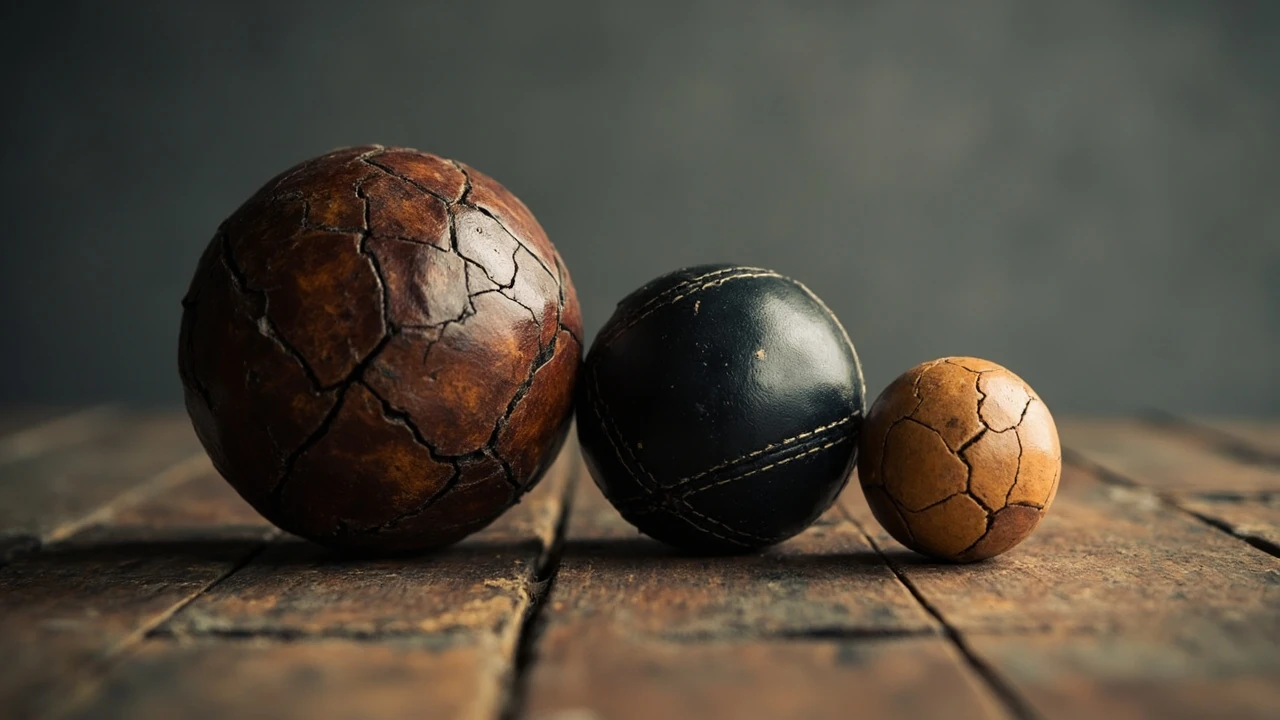
Which ball in quidditch is the largest, and why it matters for game design
The short answer to which ball in quidditch is the largest is straightforward: the Bludger is the largest of the four standard match balls used in Quidditch. It is a heavy, bewitched iron ball used by Beaters to disrupt opposing Chasers, knock players off their brooms, and force tactical errors. The Quaffle is a slightly smaller leather ball used for scoring, the Golden Snitch is a small, fast, winged ball worth 150 points, and the fourth ball referenced in some rule sets is treated as a regulatory marker rather than a separate physical object. The size difference is not accidental; each ball is sized to match its gameplay role, and that mapping is the part that matters when Quidditch appears in a game.
For a developer or designer, the question is rarely a trivia fact. It shapes hitbox calibration, projectile speed, visual readability, animation rigging, AI behaviour, and the player’s mental model of risk. A correct Bludger-to-Quaffle size ratio gives the player a clear cue: the large heavy ball is dangerous, the medium ball is a scoring opportunity, and the small golden ball is the chase objective. Get those cues wrong and the entire sports loop collapses because players can no longer prioritise targets quickly.
This article breaks the answer down into the parts a game team needs: the four balls and their roles, the relative sizes, how those sizes map to hitbox and visual scale, how AI Beaters and Snitch behaviour depend on the size difference, and the design pitfalls that appear when the Bludger is mis-sized, the Snitch is mis-coloured, or the Quaffle disappears into the background.
The four Quidditch balls and their gameplay roles
Quidditch uses three active match balls, plus a fourth reference object that appears in some rule descriptions. Each ball has a defined role, a defined size, and a defined handler. Understanding the role before the size is important because the size only makes sense in service of the role.
Bludger: the largest ball
The Bludger is a bewitched iron ball, ten inches in diameter according to the standard description, and it is the heaviest object on the pitch. Two Bludgers are typically used in a regulation match. They exist to threaten players, knock them off their brooms, and force Beaters into constant intervention. Because of the size and weight, a Bludger hit must feel heavy, slow to accelerate, and dangerous on impact. A correctly sized Bludger reads as a clear threat at a glance, which is the visual contract a sports game needs to maintain.
Quaffle: the medium scoring ball
The Quaffle is a leather ball, slightly smaller than a standard football, and it is the only ball that scores goals. Chasers pass it between teammates and try to throw it through one of three hoops. The Quaffle is the player’s primary interaction target. Its size is chosen to fit comfortably in a player’s hand, so the visual and collision scale should match a held prop rather than a projectile. In a 3D game, the Quaffle is usually parented to the carrying Chaser’s hand or broom mount, and its hitbox is treated as a soft grab volume rather than a hard projectile.
Golden Snitch: the smallest and fastest ball
The Golden Snitch is a small, walnut-sized winged ball that is released at the start of the match and is worth 150 points. The Snitch is the chase objective for the Seeker. Its small size is what makes it hard to spot at distance, which is the entire gameplay point. In a game, the Snitch should be small enough that spotting it requires peripheral vision, and fast enough that catching it requires a dedicated pursuit loop, not incidental collision.
The fourth ball: regulation, not gameplay
Some descriptions refer to a fourth Quidditch ball, but in most published rule sets the fourth reference is the change-up marker, the ball that referees use to signal substitutions, fouls, or end-of-period resets. It is not a persistent physical object in the simulation. A developer building a Quidditch mode can treat it as a referee tool or an event trigger and skip adding a real fourth projectile.
Ball sizes compared
Size comparison is the most useful reference for a game team because it drives visual scale, collision radius, and animation choices. The values below use the standard description and assume realistic units; a project can scale them up or down as long as the relative ratios hold.
| Ball | Approximate diameter | Approximate mass | Primary role | Typical speed band |
|---|---|---|---|---|
| Bludger | ~25 cm (10 in) | Heavy, bewitched iron | Threat projectile, Beater-controlled | Slow to medium, high impact |
| Quaffle | ~22 cm (slightly smaller than a football) | Standard leather | Scoring ball, Chaser-controlled | Medium, throw-based |
| Golden Snitch | ~5 cm (walnut-sized) | Very light, winged | Match-ending chase objective, Seeker-controlled | Very fast, erratic |
| Change-up marker | Not a match projectile | Negligible | Referee signal only | No movement |
The important ratio is Bludger to Quaffle to Snitch. The Snitch should be roughly a fifth the diameter of the Bludger so that the player’s eye separates them by silhouette, not by colour alone. If the Snitch is too large, the chase loop stops feeling like a hunt and starts feeling like a collectible pickup.
Why the Bludger being the largest matters in a game
The Bludger is the largest of the four Quidditch balls and the heaviest, and both facts matter in implementation. Size gives it visual weight, which tells the player to avoid it. Mass gives it collision weight, which tells the physics solver to push back hard when a player is hit. Together, they create the threat loop that makes the Beater role useful and the Chaser role risky.
Visual scale and silhouette readability
Visual readability is the first job of a sports ball. A player has to identify the Quaffle, the Snitch, and a Bludger within a fraction of a second, often at distance, often while the camera is panning. The size ordering Bludger greater than Quaffle greater than Snitch supports that identification, but only if the silhouette is also distinct. In practice, three rules help:
- Use a slightly darker, more textured surface for the Bludger so it reads as heavy iron rather than leather.
- Keep the Quaffle a neutral mid-tone so it does not compete with the Snitch for attention.
- Give the Snitch a small high-contrast rim and animated wings so the silhouette pops at long range.
If the Bludger is visually similar to the Quaffle, players will misread the threat and the loop breaks. If the Snitch is too dim, Seeker play becomes frustrating rather than rewarding.
Hitbox calibration
Hitbox size should not be a 1:1 match with the rendered mesh. The Bludger is the largest ball, but it is also slow, so its effective hitbox can be slightly larger than its mesh without feeling unfair. The Snitch is the smallest ball and the fastest, so its hitbox is usually a generous sphere or a small swept volume to keep the catch loop forgiving. The Quaffle uses a held prop volume, not a projectile sphere, because it is carried more often than it is thrown.
Physics weight and impulse
Mass influences how the physics solver reacts to a collision. A Bludger strike should apply a strong impulse that knocks a Chaser off line, a Quaffle block should slow the ball and let the Chaser recover it, and a Snitch touch should register as a soft, non-impulsive contact. Get the mass ordering right and the three actions feel like three different sports at once, which is what Quidditch is supposed to feel like.
Mapping ball roles to positions and AI behaviour
The size and weight of each ball is not just a visual property. It determines which position interacts with which ball, how the AI schedules that interaction, and how the camera and HUD treat it. A Quidditch mode usually has four roles per side: three Chasers, two Beaters, one Keeper, and one Seeker. Each role binds to a specific ball and a specific loop.
| Role | Primary ball | Secondary ball | Default loop |
|---|---|---|---|
| Chaser | Quaffle | Avoids Bludger | Pass, drive, shoot, recover |
| Beater | Bludger | Protects teammates from Bludger | Aim Bludger, intercept opposing Beater, peel for Chasers |
| Keeper | Quaffle (defensive) | Tracks Bludger path | Block shots, clear rebounds, communicate pressure |
| Seeker | Golden Snitch | Ignores Quaffle and Bludger unless imminent | Search, pursue, dive, catch |
Once roles are bound to balls, the AI can schedule tasks. Beater AI should re-aim a Bludger roughly every few seconds, Chaser AI should run passing patterns, Keeper AI should mirror the Quaffle’s predicted arc, and Seeker AI should bias toward the Snitch unless an opposing Seeker is closer. The ball size ordering supports this scheduling because the largest ball has the longest AI reaction budget and the smallest ball has the shortest.
Common design pitfalls when porting Quidditch to a game
Quidditch ports tend to fail for a small set of predictable reasons. Most of those reasons come from getting the ball size and weight wrong, then building AI and UI on top of that wrong foundation.
Snitch too large
If the Snitch is more than a fifth the diameter of the Bludger, the Seeker loop turns into a bumper-car catch rather than a pursuit. The Snitch should be small enough that the player has to commit to a dive and a direction change to catch it.
Bludger too small
If the Bludger is sized like the Quaffle, the threat loop collapses. Players stop dodging because the visual cue is no longer distinguishable, and the Beater role loses its meaning because the Bludger no longer feels like a heavy projectile.
Quaffle too bright
A Quaffle that competes with the Snitch for attention forces the camera to choose between them, which usually means neither reads correctly. The Quaffle is a mid-tone prop, not a glowing objective.
Beater AI without a target priority
A Beater that throws a Bludger at random makes the Bludger feel like decoration. Tie Beater AI to a target priority list: opposing Chaser with the ball, then unblocked Chaser, then opposing Seeker, then nearest opposing player. The size of the Bludger makes the consequence of those choices feel meaningful.
Camera framing the whole pitch
Quidditch is a layered game. Chasers play a local passing game, Beaters play a tactical interference game, and the Seeker plays a long pursuit. A single wide camera cannot show all three at once. Use role-aware framing: Chasers get a follow camera, Beaters get a tactical map view, and the Seeker gets a chase camera that swings wide when the Snitch is far and tight when the Snitch is close.
Validation checks before shipping a Quidditch mode
A short, opinionated checklist catches the most common Quidditch design problems before they reach QA. Run these checks with a designer, an animator, and a programmer in the same room, and capture the results in the design review log.
- At a glance, can a new player point to the largest ball and call it the Bludger within five seconds?
- Does the Snitch read as small and fast at the maximum camera distance used during Seeker play?
- Does a Bludger hit on a Chaser produce a noticeable camera shake and a control interruption?
- Does the Beater AI change target priority when a Chaser gains possession inside the scoring zone?
- Does the Quaffle held by a Chaser visually clear the player’s hand rig without z-fighting?
- Can the Seeker catch the Snitch with a committed dive, and does the catch animation hold for at least one second?
- Does the HUD show the Snitch location at long range as a soft marker and at close range as a hard marker?
Each item maps to a real failure mode. If any of them fail, the fix is usually a size, a colour, or a camera distance, not a feature change.
Quick reference: the largest Quidditch ball at a glance
For a developer who needs the answer in one line, this is the summary that should sit at the top of the design document. For player-facing copy, the same fact is the one that should appear in the tutorial overlay so the player understands the threat loop from the first match.
- Largest ball in Quidditch: the Bludger, a bewitched iron ball roughly ten inches in diameter.
- Number of Bludgers in a regulation match: two, both Beater-controlled.
- Role of the Bludger: threat projectile, used to disrupt Chasers and protect teammates.
- Why the size matters: the Bludger is the largest ball so the player can read it as the danger cue at a glance, and so its hitbox and physics impulse can feel heavy without unfair one-shot kills.
External references for further reading
For player-facing reference copy, a working summary of the answer is captured in a short Q&A entry that lists the Bludger as the largest of the standard Quidditch balls and the Golden Snitch as the smallest, which is consistent with the in-game size ordering described above. Designers building a Quidditch mode can use that ordering as a quick check against their own ball sizing. The detailed answer is available on a community answers page that covers Harry Potter: Hogwarts Mystery trivia questions and includes the ball size comparison in plain text.
For a more general overview of the four Quidditch ball types, the Wikipedia article on Quidditch describes the Bludger, the Quaffle, the Golden Snitch, and the change-up marker with the same size ordering that this page uses as its reference. It is a useful sanity check for any team whose design document lists a different ratio, and it is the place to start if a producer asks why the Bludger is sized the way it is in the build.
Frequently asked questions
Which ball in quidditch is the largest?
The Bludger is the largest of the standard Quidditch balls. It is a bewitched iron ball used by Beaters to threaten opposing players, and it is the heaviest projectile on the pitch. Its size and weight are what make it read as a threat in a game and what make a Bludger hit feel like a heavy collision rather than a soft bump.
How big is the Bludger compared to the Quaffle?
The Bludger is roughly ten inches in diameter, slightly larger than the Quaffle, which is sized closer to a regulation football. The size difference is small in absolute terms, but it is large enough to read as a silhouette difference on screen and to support a heavier physics impulse on impact.
How big is the Golden Snitch compared to the other balls?
The Golden Snitch is walnut-sized, which puts it at roughly a fifth of the Bludger’s diameter. That small size is what makes the Seeker loop feel like a hunt. If the Snitch is sized closer to a marble, the loop becomes a pixel hunt; if it is sized closer to the Quaffle, the loop becomes a collectible rather than a chase.
How many Bludgers are used in a match?
A regulation Quidditch match uses two Bludgers. Each team has two Beaters, and the Beaters share control of the Bludgers. A game can simulate both Bludgers as separate physics objects with their own AI states, or it can pool them into a single Beater task scheduler that picks a target and dispatches the closer Bludger.
Does Quidditch have a fourth ball?
Most published rule sets refer to a fourth Quidditch ball as a change-up marker, which referees use to signal substitutions, fouls, or end-of-period resets. It is not a persistent physical projectile in the match simulation, and a Quidditch mode can treat it as a referee event trigger rather than an additional ball to render or simulate.
Why is the Bludger the largest ball in Quidditch?
The Bludger is the largest ball because its role is to threaten players and force Beaters into constant intervention. A larger silhouette makes the threat readable at distance, and a heavier mass makes the impact meaningful. The size is a gameplay decision, not a flavour detail, and that is why a Quidditch port should preserve the Bludger-to-Quaffle-to-Snitch size ordering even when the rest of the pitch is stylised.
How should the Bludger be sized in a stylised or cartoon Quidditch game?
Preserve the ratio, not the absolute size. A stylised Bludger can be twice the diameter of the Quaffle and the Snitch can stay walnut-sized, and the threat loop still works. What matters is that the largest ball reads as the largest ball at the camera distance the player uses most often, and that the Snitch stays small enough to require a dedicated pursuit.
How should the Bludger be animated to communicate its size?
Use slow acceleration, a low maximum speed, and a heavy wobble on contact. Avoid fast spins, which read as light objects. The animation should sell weight, not speed, because the Bludger’s threat comes from mass, not velocity.
What is the right camera distance for reading Bludger size?
Set the Chaser follow camera so the Bludger remains clearly larger than the Quaffle at the player’s typical viewing distance. If a Beater’s tactical map view shrinks the Bludger below the Quaffle’s silhouette, increase the Bludger icon size or add a threat ring to keep the cue readable.
Where can a designer verify the Bludger size in writing?
The standard ball size and role descriptions are summarised on the Wikipedia Quidditch page, and the largest-ball fact in particular is repeated across community Q&A pages such as the Harry Potter: Hogwarts Mystery answers entry on AppGamer. Both sources agree that the Bludger is the largest of the standard Quidditch balls and that the Golden Snitch is the smallest.


Leave a Reply