
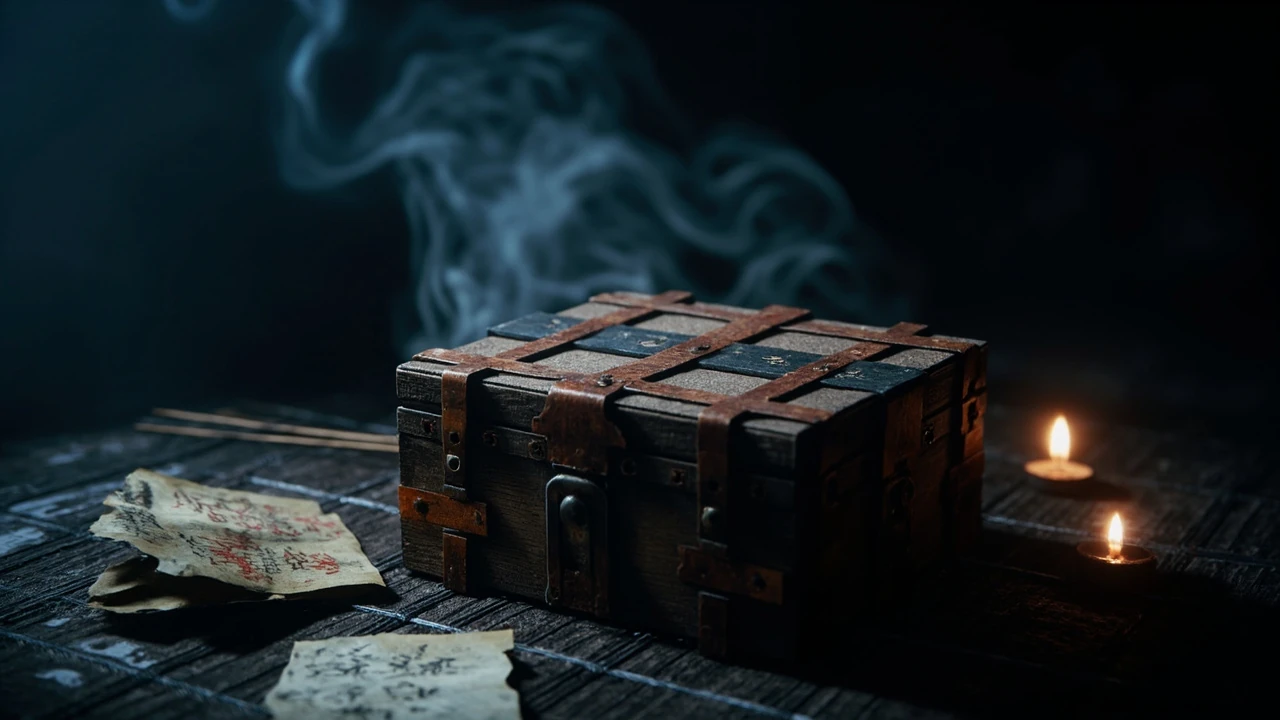
Silent Hill f puzzle box: how it works and what to expect
The Silent Hill f puzzle box is one of the most discussed environmental objects in the new entry because it sits at the intersection of series tradition and the game’s distinctly Japanese setting. It functions as a multi-step container that gates progression, but the way it is built, the way it is discovered, and the way it punishes mistakes all depend on the same underlying design idea: a small physical ritual that the player has to perform in the right order, in the right place, while the world quietly watches. For a developer or curious player, it is a useful case study in how a single environmental prop can carry item management, worldbuilding, and difficulty pacing at the same time.
This article is a focused developer-facing walkthrough of the Silent Hill f puzzle box. It covers what the object is inside the game world, what players actually have to do to open it, the resource and item dependencies behind it, the design conventions it borrows from earlier Silent Hill games, and the constraints a development team typically faces when implementing a similar shrine-style container. Where the topic touches on the broader production, localization, and platform situation around the title, links point to verified sources rather than speculation.
What the Silent Hill f puzzle box is inside the world
The puzzle box is a freestanding wooden cabinet that resembles a household butsudan or a small household shrine, sized so that the player can interact with it directly. It is not a generic storage crate: its surface is decorated with paper talismans, an offering dish, and a sliding front panel, all of which signal that opening it is meant to feel like a ritual rather than a loot action. Visually, it shares a design vocabulary with other shrines, votive stands, and household altars scattered through the environment, so the first time a player encounters one the iconography already tells them that something is being asked of them, not just opened.
Mechanically, the cabinet is a sequenced lock. It is not solved with a single key, dial combination, or sliding tile puzzle. Instead, the player has to provide several discrete inputs: a specific physical object, a placement action, and often a contextual trigger that only becomes available after a story beat. The Silent Hill f puzzle box is the place where the game quietly tests whether the player has been reading the environment, managing inventory weight, and paying attention to audio cues that other objects in the room have been emitting since the area was entered.
Because the prop is treated as part of the level rather than as a UI element, the puzzle is intended to be discovered through exploration rather than by menu. A player who runs past the cabinet and only later realizes they needed to return with an item is encouraged, by the layout of the surrounding rooms, to retrace a path that itself becomes part of the horror experience.
Core steps the player performs
Although the exact item set can shift with difficulty and progression, the Silent Hill f puzzle box follows a recognizable three-stage loop that is worth documenting for any developer trying to reproduce a similar mechanic in their own project.
- Discovery and reading: the player inspects the cabinet, reads the talismans, and picks up cues about what kind of object is expected, often by noticing an empty offering dish or a missing talisman slot on the surface.
- Acquisition and preparation: the player backtracks or pushes forward to find the required item, making sure their inventory can carry it, that they have cleared the path of enemies, and that any optional sub-objectives near the cabinet are completed first because returning later may not be safe.
- Ritual input and validation: the player places the item, triggers the contextual action, and watches a short scripted sequence that confirms the box is open and that whatever was inside has been transferred to the player’s inventory.
The middle step is where the puzzle is actually solved, not the last one. Many players instinctively treat the offering action as the puzzle, but the real work has already been done by the time they press the interact button. That distinction matters when you look at the object as a design choice, because it explains why so much surrounding detail is placed in the room: the game is giving the player the information they need before the moment of input.
Inventory, weight, and the carrying economy
The puzzle box interacts directly with the inventory and weight system that runs through the rest of Silent Hill f. The game tracks carried weight against a soft cap, and crossing that cap reduces stamina recovery, movement speed, and the ability to perform a quick dodge at full effectiveness. The items the player needs to bring to the Silent Hill f puzzle box are rarely lightweight: they are typically mid-tier key items, and carrying one often means choosing not to carry a consumable that the player would otherwise want to hold in reserve.
This is the part of the experience that the marketing screenshots do not show, and it is the part that defines whether a player enjoys the cabinet. A player who arrives with a stack of healing items and the required offering will probably find the puzzle straightforward. A player who arrives with the offering and almost no consumables will find the same puzzle tense, because they know that a single enemy encounter on the way back could drain a resource they cannot easily replace.
For developers, this is the heart of the design. The puzzle box is a forcing function on the carrying economy. It forces the player to make a triage decision: do I prioritize the consumable I might need on the way out, or the key item I need to open the box right now? The designers do not have to script that decision; the inventory system scripts it for them.
Common sticking points and how the game hints at them
Players who get stuck in front of the Silent Hill f puzzle box almost always get stuck for one of three reasons, and each has a corresponding environmental signal that the game has been offering for several minutes before the player notices.
- Missing prerequisite item: the offering dish is empty, but the player has not picked up the item from a previous room. The hint is usually a slightly out-of-place light source or a half-open drawer in the room where the item originally sat.
- Wrong order of operations: the player is trying to trigger the box before a story beat has been completed. The hint is a non-interactive version of the cabinet earlier in the level, which the player can examine but not open, signaling that the prop will only respond later.
- Over-encumbered state: the player technically has the right item but is at the inventory cap. The hint is the stamina bar visibly compressing when they try to interact, or a slow-motion approach animation that does not quite reach the cabinet.
These three failure modes are deliberately non-fatal. The game does not lock the player out of the puzzle box or destroy the required item if they approach it at the wrong moment. Instead, the box just does not respond, and the player is left with an information gap that the surrounding environment is designed to fill once the player looks more carefully.
Audio, lighting, and the cabinet as a storytelling prop
Long For additional context, before the player touches the Silent Hill f puzzle box, the sound design has been preparing them for it. The cabinet has a low, almost sub-bass tone associated with it, and that tone changes pitch as the player carries the right item versus the wrong one. Most players will never consciously notice the pitch shift, but they will feel that the room “feels different” when they are carrying the correct offering, and that feeling is what the sound design is engineering.
Lighting plays a complementary role. The cabinet sits under a directional light that is warmer than the rest of the level, regardless of the broader environmental palette. The light is angled so that the empty offering dish catches a small highlight. When the player places the correct item, the highlight grows and the warmer color spreads slightly across the front of the box, which is the visual confirmation that they have performed the ritual correctly.
For a developer, this is the part of the cabinet that is hardest to copy. The interaction is simple, the asset is small, but the supporting audio and lighting work is what makes the prop feel meaningful. A team that bolts the same interaction logic onto a generic crate will end up with a puzzle that is mechanically identical and emotionally empty, because the surrounding atmosphere is what tells the player that the act of opening the box matters.
How the puzzle box fits the broader Silent Hill tradition
The Silent Hill series has a long history of using objects as puzzles. The original games leaned on lock combinations and abstract tile patterns, while later entries introduced more physical rituals: clock towers, music boxes, and similar mechanical metaphors for psychological states. The Silent Hill f puzzle box is a deliberate continuation of that lineage, with a specifically Japanese set of cultural references layered on top. The butsudan-style cabinet is not incidental iconography; it is the game telling the player, in the same visual language the rest of the level uses, what kind of puzzle this is and what kind of behavior it expects.
That connection to the series is part of why the cabinet is so thoroughly documented by the community, and it is also part of why the wider project has been covered by outlets that normally focus on horror design rather than pure entertainment. The game’s broader production and platform situation, including the rating classification decisions around it, is documented in regional press coverage that is worth reading for context, such as the Australian classification report summarized in press-start.com.au’s coverage of the Australian classification decision, which provides useful background for this point. For a developer audience, that article is less about the specific regulatory ruling and more about how a finished product’s content ends up shaping its distribution, which in turn shapes how puzzles like the shrine cabinet are encountered by players on different platforms.
Design lessons the cabinet offers to other projects
Looking at the Silent Hill f puzzle box as a design pattern rather than as a single quest, the cabinet offers a small set of reusable lessons that translate well to other horror, survival, and adventure projects.
- Make the puzzle a ritual, not a transaction: the player should feel that they are performing a small ceremony, not just pressing a button, and the environment should reinforce that feeling with audio, lighting, and animation.
- Hide prerequisites in plain sight: the items and story beats required to open the box should already be present in nearby rooms, so the player never has to backtrack to an area they have not seen before.
- Let the inventory system do the difficulty work: the puzzle does not need a complex input sequence if the carrying economy forces the player to make a real choice about what they bring.
- Provide non-fatal failure: the box should refuse to open cleanly when conditions are wrong, with environmental cues that explain why, instead of locking the player out of the area or destroying their items.
- Treat the prop as a piece of level art: the cabinet is part of the room’s silhouette and lighting, not a separate object dropped into the scene after the level is dressed.
None of these are unique to Silent Hill f, but the cabinet is a particularly clean example of all five of them working together in a single interaction. That is why it tends to come up in postmortems and design talks, and why it is worth a focused technical write-up rather than a generic mention in a review.
Implementation notes for a similar shrine-style prop
For a team that wants to build an equivalent of the Silent Hill f puzzle box in their own project, the implementation breaks down into a few discrete systems that can be built independently and then wired together.
- State machine on the prop: the cabinet should expose states such as
Idle,AwaitingItem,ItemPlaced,RitualInProgress,Open, andDepleted, with explicit transition conditions that the rest of the game can query. - Inventory check at interaction time: when the player triggers the cabinet, the system should query the inventory for the expected item, return a structured result rather than a boolean, and let the animation system choose the appropriate response.
- Light and audio drivers: the cabinet should own a small set of parameters (light color, light intensity, low-frequency gain, ambient sting) that can be driven by the state machine, so audio and lighting can react in lockstep with interaction.
- Save and load integrity: the cabinet’s state must be fully serializable, including the timestamp of the last interaction, so that the puzzle does not soft-lock the player if the game is reloaded mid-ritual.
- Localization surface for the talismans: any text on the cabinet itself should be treated as a localized asset with dedicated slots, rather than baked into a texture, so the team can iterate on wording without re-exporting the model.
Each of these is small in isolation. Together they produce a prop that feels like it belongs to the world rather than to the quest system, and that is the difference between a puzzle box that is remembered and one that is forgotten the moment the player walks past it.
Where the cabinet sits in the wider level
The Silent Hill f puzzle box is rarely placed in a dead-end corridor. It is almost always in a transitional space: the room between two larger set pieces, a side room off a long hallway, or a small antechamber that the player has to choose to enter. That placement is part of the design, because the cabinet is a soft reward for thorough exploration, not the main objective of any given chapter. The player who only follows the critical path will reach the end of the chapter without opening the cabinet, and the player who opens the cabinet will feel that the game has acknowledged their curiosity.
This is also why the cabinet rarely gates the main story. It is a side container that yields a useful but not essential reward, so a player who misses it is not punished with a blocked critical path, only with a slightly thinner inventory for the next combat encounter. That choice keeps the design honest, because the cabinet is a place where the player can practice the carrying economy without the game punishing them for getting it wrong.
Comparing the cabinet to other in-world containers
Every Silent Hill game has some version of the cabinet, and the differences between them are useful for understanding the design space. The table below compares the Silent Hill f puzzle box to a small set of comparable in-world containers from the broader survival horror genre, focusing on the dimensions a developer would care about.
| Container | Input type | Inventory interaction | Narrative weight | Failure behavior |
|---|---|---|---|---|
| Silent Hill f puzzle box | Item placement plus story trigger | Soft cap, weight-based trade-off | High, ritualized | Refuses to open, environment hints why |
| Classic Silent Hill key-locked drawer | Single key item | Binary carried or not | Medium, mechanical | Locked, no response |
| Generic survival horror locker | Code or lever sequence | None at interaction time | Low, functional | Wrong input, brief denial animation |
| Open-world shrine container | Currency or consumable sacrifice | Spend resource to open | Medium, transactional | Open always, lose resource regardless |
| Escape room style combination safe | Multi-step code discovery | None at interaction time | High, intellectual | Wrong code, lockout timer |
The Silent Hill f puzzle box is distinctive because it sits between the mechanical key-locked drawer and the more abstract combination safe, but it borrows the carrying-economy trade-off from open-world design. That hybrid is what gives it its character, and it is the part that other projects most often get wrong when they try to imitate it.
How the cabinet scales across difficulty
The Silent Hill f puzzle box has a small set of parameters that the difficulty system can tune, and understanding them helps explain why the experience feels fair even when the carrying economy is harsher on harder settings.
| Parameter | Easier behavior | Harder behavior | Player-visible effect |
|---|---|---|---|
| Weight cap | Higher cap, slower drain | Lower cap, faster drain | More or less room to carry the offering alongside consumables |
| Hint strength | Stronger light, longer audio swell | Subtler light, audio shifted later | Whether the player notices the empty offering dish on first inspection |
| Enemy density near cabinet | Fewer or weaker enemies | More or stronger enemies | Whether the approach is tense or a quiet moment |
| Reward tier | Healing and ammunition focus | Key items and progression aids focus | Whether the cabinet feels like a small bonus or a critical find |
| Respawn behavior | Item persists on reload | Item may not persist if the room is re-entered | Whether missing the cabinet is recoverable later |
The interesting design move is that the cabinet’s core interaction never changes. The player still places an item, triggers a ritual, and receives a reward. What changes is the surrounding context, which is what makes the same prop feel more or less forgiving without any change to the puzzle logic itself.
Localization and cultural reading of the cabinet
Because the Silent Hill f puzzle box draws on a specifically Japanese set of references, the localization team has to decide how strongly to push those references into other languages. There are three common approaches, each with trade-offs.
- Literal translation: the talismans, the offering dish, and the supporting environmental text are translated directly, which preserves the cultural specificity but may feel opaque to players who do not recognize the iconography.
- Adapted iconography: the prop is reskinned with a regional equivalent, for example a different kind of household altar, which preserves the ritual but loses the Japanese specificity that is part of the setting.
- Hybrid overlay: the prop keeps its original form and a short, optional glossary entry explains the cultural reference, which preserves both the visual design and the player’s ability to read it without forcing a full reskin.
The cabinet is a useful test case for whichever approach a studio prefers, because it is small enough to fully re-author and large enough to be visible in almost every screenshot of the level. The choice also affects audio, since the low-frequency tone associated with the cabinet is layered with very short incidental sounds that may or may not translate cleanly to other cultural contexts.
Performance and asset considerations
From a production perspective, the Silent Hill f puzzle box is a relatively cheap asset. The cabinet itself is a single mesh with a small texture set, the offering dish is a separate small mesh, and the talismans are a small set of decals that can be pooled. The expensive part of the prop is not the geometry but the supporting audio and lighting rig, which has to be tuned per room and which often needs to be re-baked when the level’s lighting changes.
For a team that is considering a similar prop, the practical advice is to budget the prop’s supporting systems at roughly the same cost as the prop’s main mesh. A team that budgets the cabinet as a single asset and the lighting and audio as shared level work will end up with a prop that looks and sounds generic, because the level team’s attention is pulled toward the larger set pieces. Treating the cabinet as a small package that includes its own lighting and audio makes the difference between a prop that lands and one that does not.
Player guidance versus developer guidance
Most of the existing coverage of the Silent Hill f puzzle box is written for players who want to know exactly which item to bring and when. That coverage is useful, but it is not the only useful reading. The cabinet is also a clean example of a few design principles that show up across the series and across the genre, and looking at it from that angle is more durable than memorizing a single quest solution. The wider cultural and production context of the project, including the platform and rating decisions that shape how the cabinet is encountered in the first place, is documented in the English Wikipedia article on Silent Hill f, which is a reasonable starting point for any reader who wants to step back from the cabinet and look at the project as a whole.
For developers, the cabinet is also a reminder that a single in-world prop can do a surprising amount of work. It can gate progression, teach the inventory system, deliver a reward, and quietly reinforce the level’s atmosphere, all without ever feeling like a traditional puzzle. That combination is rare, and it is the reason the Silent Hill f puzzle box keeps coming up in design discussions even though it is a small part of a much larger project.
Frequently asked questions
What is the Silent Hill f puzzle box in plain terms?
It is a freestanding wooden cabinet styled after a household shrine. The player has to bring a specific item to it, place the item in the offering area, and complete a short ritual interaction to open it. The cabinet is a side container rather than a main story gate, and it is designed to reward thorough exploration of the level around it.
Do I need a key item to open the Silent Hill f puzzle box?
Yes. The cabinet is not opened with a code, lever, or generic key. It expects a specific item that has to be found in the surrounding level, and the item is usually a mid-tier key item that competes with consumables for inventory space.
Can the puzzle box soft-lock the game?
No. The cabinet’s failure states are non-fatal. If the player approaches it without the right item, or before the prerequisite story beat, the cabinet simply does not respond, and the environment around it provides cues that explain why. The player’s inventory is never destroyed by attempting the interaction.
How does the inventory weight system affect the cabinet?
The cabinet interacts directly with the carrying economy. Bringing the right item usually means choosing not to carry an extra consumable, and that trade-off is the part of the puzzle that does most of the difficulty work. Players who arrive at the cabinet over-encumbered may find that the interaction does not register correctly, which is a signal to clear inventory and try again.
Is the puzzle box the same on every difficulty?
The core interaction is identical across difficulty levels. What changes is the surrounding context: the inventory cap, the strength of the environmental hints, the density of enemies near the cabinet, the tier of the reward, and whether the item inside respawns on reload. The cabinet’s state machine does not change.
Why is the prop designed to look like a household shrine?
The shrine styling is a deliberate signal to the player that the interaction is meant to feel like a small ritual rather than a loot action. The visual iconography also matches the rest of the level’s environmental design, which helps the prop feel like part of the world rather than a quest object dropped into the scene.
Does the puzzle box gate the main story?
Generally no. The cabinet is usually a side container that yields a useful but not strictly required reward. A player who only follows the critical path can still finish the chapter, and a player who opens the cabinet gets a small boost for the next encounter. This is part of why the cabinet is well suited to teaching the carrying economy without punishing the player for missing it.
Are there similar props in earlier Silent Hill games?
Yes, though their inputs and failure modes differ. Earlier entries in the series lean more on key-locked drawers, combination locks, and abstract tile puzzles, while Silent Hill f’s cabinet is closer to a ritualized container. The shift is part of the series’ gradual move toward more physical, environmental puzzles.
How can a developer reproduce a similar shrine-style prop?
The reliable pattern is a small state machine on the prop, an inventory check that returns a structured result at interaction time, dedicated audio and lighting drivers that react to state, full save and load serialization of the prop’s state, and a clean localization surface for any text on the cabinet. The prop should be authored as a small package that includes its own lighting and audio, not as a single asset that relies on shared level work.
Where can I read more about the broader project?
For project-level context, including setting, development, and platform information, the English Wikipedia article on the title is a reasonable starting point. For production and distribution context, regional press coverage of the project’s rating classification is also documented and is worth reading as an example of how finished content shapes distribution.


Leave a Reply