
Happy together cyberpunk: a developer’s walkthrough of the Watson side job
Happy together cyberpunk is a short, mood-driven side job in Cyberpunk 2077 that exposes a lot about how CD Projekt Red wires its dialogue engine, its objective flow, and its failure conditions. The quest drops V into a Watson residential stairwell, hands the player a small but consequential choice about a former NCPD officer named Barry, and quietly punishes anyone who clicks past the optional blue dialogue lines. When players call the mission “bugged,” the actual cause is almost always a missed optional objective, not a broken trigger. The walkthrough below traces the full side job, reads the underlying quest logic the way a developer would, and calls out the exact points where a misclick locks the run into the bad ending.
The guide assumes the player is in Act 2 and is willing to read carefully. The quest has three meaningful beats: the opening conversation with the two officers outside Barry’s door, the long chat with Barry at apartment 0613, and the trip to Westbrook’s North Oak district to find Andrew’s niche. Each of those beats is gated by either a time skip or a dialogue flag, which is why the side job is so easy to soft-lock when the player rushes.
How to start the Happy Together side job
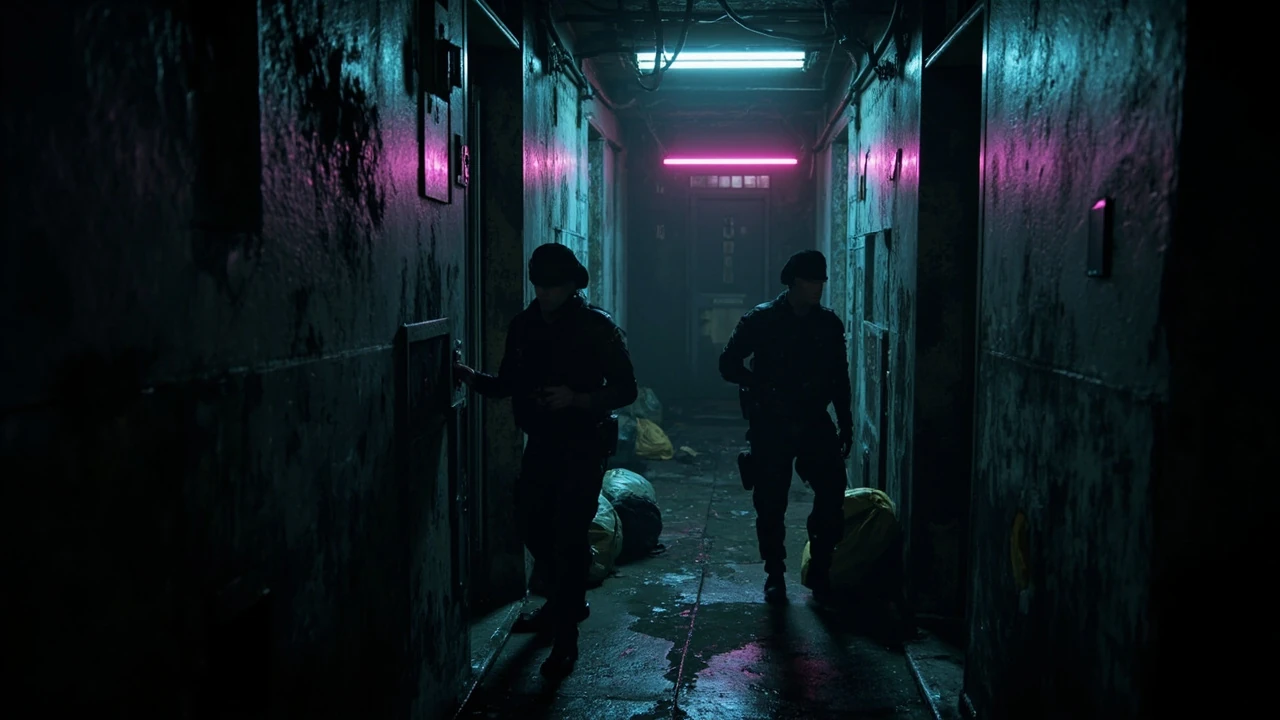
Happy together cyberpunk begins outside your own apartment. Walk downstairs from V’s apartment and you will find two NCPD officers banging on a door, trying to coax their friend, a former NCPD cop named Barry, to come out. They will not succeed while you watch. Stand near them for a moment and the officers will eventually step aside, frustrated, at which point you can step forward and start a conversation. This is the only real trigger for the side job; you cannot pull it from your journal, fast-travel straight to Barry, or pick it up from a fixer board.
From a quest-design perspective, this is a soft proximity trigger combined with a dialogue gate. The game waits for both officers to walk away before it considers the start condition met, which means walking up while they are still knocking will not register the side job. The IGN guide for the Happy Together quest describes the same soft trigger and the same wait pattern that players encounter on a fresh save. If you read quest scripts, treat this section as an example of how the developers use ambient state changes to hide quest entries inside the normal world simulation, rather than dropping a marker on the minimap the moment V loads into a district.
If you do not see the officers after a few reloads, confirm three things before assuming the quest is broken:
- You are at least in Act 2, because the mission routes you outside Watson and into North Oak.
- You have not already completed or failed the side job, because both states remove the trigger.
- You are in the correct megabuilding, since several Watson residential blocks look almost identical from the corridor.
There is also a fourth, less obvious check. The trigger is tied to the time of day that the officers spawn, which means a save loaded at an odd hour can quietly put the side job on a longer timer than the player expects. If the officers never appear and the journal is clean, fast travel to a different Watson fast-travel point, wait a full in-game day, and then come back. The trigger resets on the world tick, not on local proximity.
A small bonus observation for players who like to plan their route: the megabuilding that contains the trigger sits in the same cluster that holds several other Watson side jobs, including the familiar holocall hooks on the upper floors. Walking the block from top to bottom, then back up via the side stair, is a reliable way to scan for new dialogue triggers in a single sweep.
Knocking on Barry’s door: the time-skip check
Once the officers have asked V to check on Barry, walk to apartment 0613 and knock. He will not respond on the first attempt, and the objective will update to “try again in a few hours.” This is a deliberate wait state, not a soft-lock. Open the pause menu and skip at least three in-game hours, then knock again. Barry will answer the door and the full dialogue tree opens.
The three-hour minimum is a hardcoded value tied to the quest’s internal timer. Skipping less than that will leave the trigger in its “try again” state, while skipping more is fine because the script only checks that the lower bound has been crossed. If you prefer, you can also sleep in V’s apartment, fast travel away and back, or run a couple of small gigs in the area; any of those will advance the world clock far enough to clear the wait.
For developers reading along, this is a textbook example of a time-gated ambient event. The quest script listens for a world-clock value, not a player action, and refuses to fire its next phase until the clock crosses the threshold. The trigger has no fail state on its own; it only becomes a problem when the player assumes the quest is broken and either reloads an earlier save or abandons the side job entirely. That kind of design choice ages well in a single-player RPG because it rewards players who treat the world clock as part of the input layer.
It is also worth noting that the quest does not put a passive marker on the door during the wait. The door looks identical before and after the time skip, which is intentional: the script wants the player to learn the timing rule on their own, so the next time a similar quest in the same district asks for a wait, the player already knows the skip pattern.
Reading Barry’s dialogue tree like a developer
This is the section where most players lose the quest. Barry’s tree mixes required lines with optional blue lines, and the optional ones are not decorative. They unlock a new objective that is the only path to the good ending, and skipping them sends the run straight to Barry’s death in North Oak.
The IGN documentation calls this out explicitly: you must pick every optional dialogue choice while talking to Barry, or the mission will hard-fail at the North Oak step. Optional choices are written in blue and will not progress the conversation, so a player who is reading for plot will naturally skip them in favor of the lines that push the quest forward. The quest designer is betting that attentive players will notice the colour, while players who click through will fail.
When you are at the door, there is also a unique Body 4 option. You do not need to take it. The safe path runs through the standard dialogue choices below, as long as you also pick every blue line:
- Take the calm, non-confrontational opening line when Barry opens the door.
- Pick every blue optional line, even when it looks like a tangent about his past with the NCPD.
- When the conversation branches toward a destructive choice, pick the line that defers to Barry’s own plan rather than pushing him.
- After the chat, do not run straight back to the two officers. Wait for the new objective marker to update.
The exact phrasing varies by voice and language pack, but the structure stays the same. There is a calm path, a destructive path, and a hidden path that only opens if you read the blue lines. The hidden path is the one that adds the North Oak objective.
A few extra details are worth noting here. The Body 4 check is a soft gate, not a hard one, and the quest will route you to the standard path even if your Body stat is high. That is unusual for a quest that surfaces a stat-gated option at all, and it tells you that the option exists mostly as flavour rather than as a branching rule. It also explains why a player with a high Body build can still soft-lock the quest by ignoring blue lines: the stat check is decorative, while the colour-coded optional lines are the real key.
From a pacing standpoint, the Barry conversation is the longest uninterrupted dialogue segment in the quest. There are no combat transitions, no radio calls, and no mid-conversation cutaways. That uninterrupted window is what makes the colour-coding work: the player is forced to read for at least a minute, and the blue lines have a chance to register as something other than noise.
The North Oak segment: how to avoid the bad ending
If you picked every blue option, the journal will add a new objective in Westbrook, North Oak, pointed at Andrew’s niche. Open your map, zoom all the way out so you can actually see the marker, and fast travel. The location sits on the far side of the district, which is why a lot of players never see it. The default map zoom clips it off the screen, and without that visual cue they assume the quest is over.
Once you arrive, search the wall of niches until you find Andrew’s. The interaction is short, but it is what differentiates the two endings. Barry’s plan is to pay his respects quietly and return to his apartment, which is the version of the side job that ends well. The other path, which only opens if you ignored the blue dialogue, has you report back to the two officers without ever visiting the niche, and that path ends with Barry’s death.
From a quest-state point of view, there are essentially three flags in play at this point:
- “Spoke to Barry and read all blue lines” unlocks the North Oak objective.
- “Visited Andrew’s niche” sets the good-ending branch.
- “Reported to the officers without visiting the niche” sets the bad-ending branch and locks Barry out of the rest of his life.
If you want to verify which branch you are on, save before the North Oak visit. Reload that save if the journal does not show the niche objective, redo Barry’s dialogue, and pick the blue lines you missed. A single reload is faster than trying to repair a failed quest state later, because Cyberpunk 2077 rarely lets you re-enter a soft-locked dialogue tree without a full restart of the side job.
One thing the official documentation does not spell out is how clean the transition is between the Watson and North Oak segments. The quest does not pause the world clock, does not trigger a long loading screen, and does not put V into a cinematic walk. The transition is just a fast-travel and a wall interaction, which is unusual for a side job whose outcome decides whether an NPC lives or dies. The light touch is deliberate: it keeps the side job feeling like a small errand rather than a story-critical moment, which is the point. The emotional weight comes from the dialogue, not from the level design.
A small UX note for the wall of niches: the interactive object is a single plaque set into a larger concrete panel. If you walk along the wall and see no prompt, the camera angle is usually the issue. Step back two metres, face the wall directly, and the interaction prompt will appear on the second pass.
Quest design lessons hidden in a 20-minute side job
Happy together cyberpunk is small, but it is a clean example of three design patterns worth studying. The first is the proximity-plus-time trigger, which lets a quest feel discovered rather than assigned. The second is the dialogue tree that hides its real branch in optional lines, which rewards attentive players and punishes speed-clickers without changing the surface difficulty. The third is the geographic gate at North Oak, which forces the player to read the journal carefully before the geography of the map will make any sense.
If you are a designer or technical designer, the interesting questions are:
- How do you make an optional dialogue branch feel like the actual main path?
- How do you hide a critical objective across a map that is too zoomed-in to show it?
- How do you make a side job fail meaningfully, without making it feel like a glitch?
The answers in this quest are simple: colour-code the optional lines, push the new objective far enough that the default map view cannot display it, and make the bad ending narratively coherent. It is not the only quest in the game that uses these techniques, but it is one of the tightest, which is why it shows up so often in design discussions.
A subtler lesson is what the quest does not do. It does not lock the rest of the world behind its outcome, does not open a new vendor, and does not dump a unique weapon into the inventory. The reward is a coherent narrative beat and a stable world state. That is a useful counterweight to the assumption that every side job has to be load-bearing in the loot economy, and it gives a designer permission to ship small, quiet quests that exist mainly to round out a district’s emotional geography.
There is also a community-folder-style lesson here. Side jobs that are small enough to finish in one sitting are the ones that get shared in screenshots, written up on community wikis, and remembered months later. A 20-minute quest with a clear moral choice is more likely to become part of the game’s living memory than a four-hour quest that gates the same choice behind a faction requirement.
Dialogue choice table for the Barry conversation
The table below summarizes the structure of the conversation with Barry. It is built from the flow described in the IGN walkthrough, not from a hidden developer build, so treat the exact line text as approximate and the branching as accurate.
| Stage | Color cue | Effect on quest | Recommended action |
|---|---|---|---|
| Opening | White (required) | Starts the conversation; no flag changes | Pick the calm opener |
| Background lines | Blue (optional) | Unlocks the North Oak objective on completion | Pick every blue line, even if it feels like filler |
| Body 4 gate | White (unique) | Provides an alternate resolution if the attribute is high | Optional; safe to ignore |
| Plan choice | White (required) | Sets the good or bad branch | Defer to Barry’s plan |
| Wrap-up | White (required) | Closes the dialogue and updates the journal | Let the line finish before walking away |
Outcome and reward table
It helps to lay the two endings out side by side. The good ending is what you get for reading the blue lines and visiting the niche; the bad ending is the version of the quest that players accidentally trigger when they assume the dialogue is over the moment the journal stops updating.
| Branch | Trigger condition | Outcome for Barry | Effect on journal |
|---|---|---|---|
| Good ending | Picked every blue line, visited Andrew’s niche | Barry returns to his apartment in stable condition | Quest closes with a short wrap-up line |
| Bad ending | Reported to officers without visiting the niche | Barry dies; no follow-up scene | Quest closes with a hard failure flag |
| Soft-locked | Skipped the blue lines and the niche, then spoke to officers | Same as bad ending, with the niche objective missing | Quest closes immediately on report-back |
Common failure modes and how to recover
Happy together cyberpunk fails in a small number of recognizable ways. Each one has a fix, and most of them do not require abandoning the quest.
| Symptom | Likely cause | Fastest recovery |
|---|---|---|
| Officers never move aside | You approached too quickly or are not in Act 2 | Back away, wait a minute, then approach again |
| Barry does not answer the first knock | You have not waited three in-game hours | Skip time from the menu or sleep, then knock again |
| No North Oak objective appears | You skipped the blue dialogue options | Reload the last save and redo Barry’s conversation |
| Map shows no marker in Westbrook | The objective is outside the default zoom | Zoom all the way out and look in North Oak |
| Barry dies and the quest ends abruptly | You reported to the officers without visiting the niche | Reload the save before Barry’s death and visit North Oak first |
| Quest will not start at all | It has already been completed or failed on this save | Continue the playthrough; the side job is one-time only |
Step-by-step checklist for a clean run
Use this list as a single-screen reminder while you play. It mirrors the order of operations the quest expects, so if you follow it in sequence you should not need to reload.
- Confirm you are in Act 2 and that the Watson megabuilding is the right one for the trigger.
- Walk downstairs from V’s apartment and let the two officers walk away on their own.
- Start the conversation when they step aside and accept the request to check on Barry.
- Knock on apartment 0613, accept the “try again later” objective, and skip at least three hours.
- Knock again, then read every line. Pick every blue optional choice, even if it seems like a tangent.
- Decline the Body 4 unique option if you do not have the attribute; the safe path works without it.
- Let the conversation close naturally and wait for the journal to add the North Oak objective.
- Open the map, zoom out fully, and fast travel to the North Oak marker in Westbrook.
- Search the wall of niches until you find Andrew’s and complete the interaction.
- Return to your own pace; the side job ends here and the world state stays consistent.
Where the quest sits in the broader Watson side-job arc
Happy together cyberpunk is not a stand-alone story. It shares its trigger district, its tone, and its pacing with several other Watson side jobs that all gate on small, often residential, moments. The pattern is consistent: a quiet NPC encounter, an optional dialogue branch, and a soft failure state that is easy to miss on a first run. If you enjoy the structure of this quest, the surrounding jobs reward the same kind of patient reading.
Two related reads on the site are useful here. The general gaming trends overview for Elmagplayers covers the broader live-service and side-content design conversation that influences quests like this one, while the Assassin’s Creed Odyssey walkthrough field map walks through a much larger quest web built on similar design patterns, including optional dialogue branches and map-zoom-dependent objectives. Reading them in sequence gives a useful comparison between a small, tight side job and a much larger hub-and-spoke quest system.
It is also worth noting how Happy Together compares to its Watson neighbours. A few jobs in the district open with a holocall, a few with a wounded NPC on the street, and a few with a fixer card. Happy Together is unusual because it begins with two named officers on a domestic errand, and the entire side job stays in the residential register. That tonal consistency is part of why it is often cited in design discussions: the quest does not borrow cyberpunk iconography to dress up a fetch, it just lets two cops try to help their friend and lets the player decide whether to follow along.
A second comparison is worth flagging. Several Watson jobs use a mid-quest fast travel as a soft chapter break, and Happy Together is one of the smallest examples of that pattern. The North Oak detour takes ten minutes of in-game time, but it does the same narrative work that a much longer quest would do with a loading screen and a scripted walk.
Performance, pacing, and the developer-facing read
For developers, the most useful thing about Happy Together is not the narrative; it is the pacing. The quest takes roughly 20 to 30 minutes on a clean run, which is short enough to be a one-evening side trip and long enough to teach a player how dialogue flags work. That timing is intentional, because the mission uses the same soft pacing that the rest of the Watson side jobs use, and it integrates with the world clock instead of pausing it.
From a runtime perspective, the relevant design choices are:
- The wait state is driven by the world clock, not by a separate quest timer.
- The optional dialogue flag is set the moment the last blue line resolves, not at the end of the conversation.
- The map objective is intentionally placed at a zoom level that requires the player to adjust the camera.
- The bad ending closes the quest with a single cutscene rather than a multi-step failure state.
Those choices keep the side job feeling like a small, lived-in story instead of a checklist. They are also the reason a fast, click-through player can fail the quest without ever understanding why.
For technical designers, the implementation pattern is worth sketching out. The quest script listens for two booleans: one that flips when the last blue line resolves, and one that flips when Andrew’s niche interaction completes. The good ending requires both. The bad ending fires on a single boolean that flips the moment the player reports to the officers. That is a small state machine, but it is large enough to carry a meaningful narrative branch, which is part of why Happy Together is often used as a teaching example in dialogue-flag tutorials.
There is also a memory-budget lesson here. The quest streams in the wall of niches as a single shared prop, which is why the interaction feels cheap on a low-end machine. The designers did not have to carve out a unique cell for a 30-second scene, and that kind of reuse is the difference between a side job that ships on day one and one that gets cut for scope.
Reading the quest against the wider Cyberpunk 2077 design language
Happy Together is a useful lens for how Cyberpunk 2077 handles moral weight. Most of the moral choices in the main story sit at the end of a long quest chain, with hours of context behind them. Happy Together compresses the same pattern into a 20-minute scene and asks the player to make the moral choice based on a single colour cue. That compression is what makes the side job feel honest: there is no time for a faction reputation meter, no time for a long cinematic justification, and no time for a side panel that tells you which answer is canon. The choice lands because the player has to read.
That design choice is also why Happy Together tends to polarise opinion. Players who read slowly tend to remember it as one of the most effective side jobs in the game. Players who play quickly tend to dismiss it as a one-scene fetch. Both readings are correct, because the quest is genuinely built for one type of player and quietly fails the other.
For modders, the quest is also a clean target. The dialogue flags are exposed in the quest script, the wall of niches uses a shared prop, and the two-officer trigger is a small ambient state. Replacing the dialogue with a custom scene, or routing the bad ending into a different follow-up, is a reasonable weekend project for anyone familiar with the Wolvenkit workflow.
Frequently asked questions
Where do I start the Happy Together side job in Cyberpunk 2077?
Walk downstairs from V’s apartment in the Watson megabuilding and wait for two NCPD officers to step away from the door they have been knocking on. Once they move aside, talk to them to start the quest.
What happens if Barry does not answer the door?
He will not answer on your first knock. The objective updates to “try again in a few hours.” Open the menu and skip at least three in-game hours, then knock again. He will answer on the second visit.
Do I need Body 4 to finish the quest?
No. There is a unique Body 4 dialogue line, but the safe path runs through the standard choices as long as you also pick every blue optional line. Body 4 is an alternative, not a requirement.
Why does Happy Together not show the North Oak marker on the map?
The objective marker is in Westbrook, North Oak, and the default map zoom clips it off the screen. Zoom all the way out from the map screen and the marker will appear in the upper part of the district.
What causes the bad ending in Happy Together?
The bad ending is triggered when you report back to the two NCPD officers without first visiting Andrew’s niche in North Oak. The visit is only added as an objective if you picked every blue optional line while talking to Barry.
Can I reload a save to redo Barry’s dialogue?
Yes, and it is the fastest way to recover from a missed blue line. Save before the North Oak segment; if the good-ending objective does not appear, reload, redo Barry’s conversation, and pick the blue lines you skipped the first time.
Is Happy Together missable?
It is not missable in the same way as a timed event, but it is one-time per save. If you fail it by skipping the optional dialogue, the quest ends and you cannot replay it on that save without rolling back to an earlier save.
Does Happy Together reward any unique loot?
The quest does not grant a unique weapon or piece of cyberware, but it does affect Barry’s fate and the side jobs gated behind his later appearances. Treat the reward as narrative continuity rather than gear.
Is Happy Together part of a larger questline?
It sits inside the broader Watson side-job cluster, which shares a tone and a pacing model. It is not part of a single connected storyline the way the main missions are, but its outcome influences the world state of Barry’s district.
Should I finish Happy Together before or after the Voodoo Boys?
Either order works, because the side job does not lock or unlock main story content. If you want a calm palette cleanser between heavier main missions, doing it after the Pacifica arc is a comfortable place for it.
Practical next steps for players and developers
If you are a player, the next step is simple: finish the Watson arc, pick every blue line when you reach Barry, and enjoy the quiet Westbrook detour. If you are a designer, the next step is to study how a 20-minute side job can teach dialogue-flag literacy without any on-screen tutorial, and then look at how your own quests handle optional branches. Happy together cyberpunk is small, but it is a useful reference point for both audiences.

Leave a Reply